
How Do You Prepare a Commercial Lot for Asphalt Paving?
Last Updated: November 22, 2026
Quick Summary
Commercial lot preparation follows a set sequence: assess the site and define scope, confirm utility locates and permits, then strip unsuitable material, excavate to design depth, grade for drainage, stabilize the soil, and compact the aggregate base in lifts until it passes density checks. Confirm drainage and dry weather readiness before the surface course goes down.
- Log cracking, potholes, and drainage problems during the initial site assessment.
- Removal depth depends on soil testing, not guesswork.
- Slope the subgrade so water moves toward drainage structures instead of ponding.
- Skipping density testing and proof rolling is the most expensive shortcut in paving.
- Confirm catch basins are clear and slopes correct before the surface course.
Table of Contents
- Before the Crew Arrives: Your Commercial Asphalt Paving Project Checklist
- Parking Lot Subgrade Preparation: Excavation, Grading, and Compaction
- Commercial Parking Lot Drainage and Weather Readiness
- Frequently Asked Questions
Before the Crew Arrives: Your Commercial Asphalt Paving Project Checklist
Weeks of commercial lot preparation before mobilization largely decide whether pavement lasts or fails early. Commercial lot preparation comes down to sequencing: assess, plan, clear, and document.
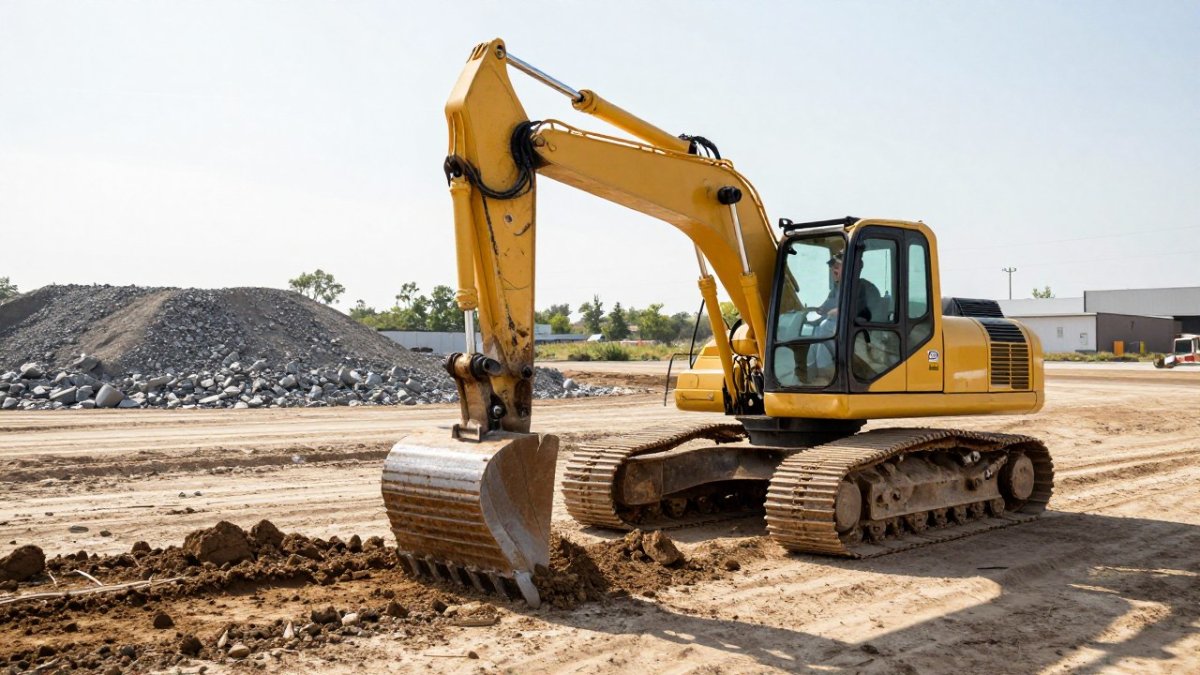
Start with a site assessment to log cracking, potholes, and drainage problems, then define scope, full reconstruction, mill and overlay, or spot repair, and confirm utility locates and permits before anyone digs. Verify equipment ownership, ask for recent references, and require written documentation that materials meet standards; choosing the lowest bid without confirming the contractor has the excavation and hauling equipment needed for the job is a common mistake.
Build a realistic schedule before mobilization so weather delays don’t blindside you. Read our guides on how to plan an asphalt paving project timeline and avoiding paving contractor project delays before you sign.
Parking Lot Subgrade Preparation: Excavation, Grading, and Compaction
Subgrade preparation is the foundation step: remove unsuitable material, excavate to design depth, grade for drainage, stabilize the soil, and compact the aggregate base in lifts until it passes density checks. Crews strip existing pavement, debris, and any soft or organic soil that can’t support load; removal depth depends on soil testing, not guesswork.
The subgrade needs a slope that moves water toward drainage structures, not ponding in the middle of the lot. The aggregate base goes down in lifts, each compacted and tested before the next, skipping density testing and proof rolling is the most expensive shortcut in paving.
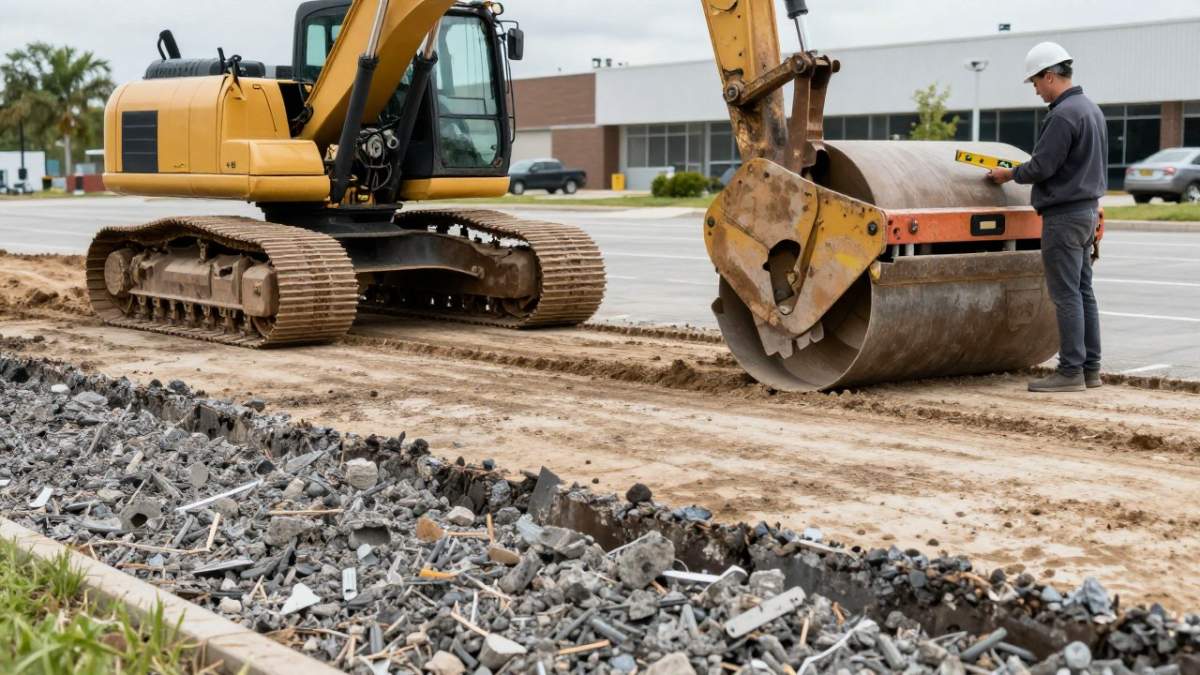
Poor subgrade work causes reflective cracking and settlement within a few seasons; our article on why professional excavation matters for paving explains the failure modes. Once the base passes, verify it against commercial asphalt quality standards before the binder course goes down.
Subgrade work follows a set sequence before the binder course goes down.
| Step | What to do | Note |
|---|---|---|
| Strip and remove | Remove existing pavement, debris, soft or organic soil | Removal depth depends on soil testing |
| Excavate | Excavate to design depth | Foundation step of preparation |
| Grade | Slope subgrade toward drainage structures | Water should not pond mid-lot |
| Stabilize | Stabilize the soil | Part of subgrade preparation |
| Place aggregate base | Put base down in lifts | Each lift compacted and tested |
| Test density | Compact until it passes density checks | Skipping density testing is the most expensive shortcut |
| Verify base | Check base against commercial asphalt quality standards | Done before binder course |
Commercial Parking Lot Drainage and Weather Readiness
Commercial parking lot drainage must be confirmed before the surface course: catch basins clear, slopes correct, and runoff directed away from the pavement structure. Standing water softens the base and accelerates cracking, so confirm inlets and piping are functional and that grading sends water to them.
Asphalt placement needs dry conditions and suitable temperatures. Build weather contingency into the schedule and agree in writing how delays get communicated.
When prep, drainage, and readiness checks are done, the project moves fast. If you’re ready to talk through your lot, book a commercial asphalt paving consultation and we’ll walk the site with you.
Preparing a commercial lot is a sequence, not a single task, and skipping steps shows up as cracking and settlement years later. All-Tech Asphalt Paving, LLC. handles the full scope in-house, from specialized excavation machinery for fast production rates to materials that meet or exceed state and federal standards, so your project stays on schedule. Get started with All-Tech Asphalt Paving, LLC. and prepare your lot the right way from the first day.
Frequently Asked Questions
What site work is needed before paving a commercial parking lot?
Commercial lot preparation typically involves a site assessment, utility locating, permit checks, removing existing pavement and debris, excavation to the required depth, soil testing, grading for slope, stabilizing weak subgrade, and installing a compacted aggregate base. Drainage structures and traffic control plans should also be settled before paving starts. Skipping any of these steps shows up later as cracking, potholes, or standing water, so confirm each one with your contractor in writing.
How can you tell if a parking lot base is ready for asphalt?
A ready base passes proof rolling without rutting or pumping, holds the specified grade and slope for commercial parking lot drainage, and meets compaction density confirmed by field testing. The surface should be uniform, free of soft spots, debris, and standing water. Ask your contractor for the density test results and a final inspection record before the binder course goes down. If the base deflects under a loaded truck, it is not ready.
How long does commercial lot preparation take before paving?
The commercial asphalt paving timeline for preparation usually runs several days to a few weeks, depending on lot size, how much existing pavement must be removed, soil conditions, and weather. Utility locating and permits can add lead time before equipment ever arrives. A phased plan keeps part of your lot open during work. Ask for a written schedule with milestones, plus a rain delay policy, so you know exactly when your lot will be usable again.
