
How Long Does Asphalt Paving Take: Timeline and Curing Guide
Last Updated: November 28, 2026
Quick Summary
Most asphalt paving takes one to three days of installation, but the full timeline runs longer once site prep and curing are counted. Plan for two clocks: crew time on site, and the time the new surface needs before normal use. Full cure takes six to twelve months for heavy traffic.
- Driveway paving typically involves one to two days of crew work.
- Parking lot or commercial lot paving takes two to five days depending on size.
- New asphalt is usually walkable within 24 to 48 hours.
- Passenger cars can typically use fresh asphalt after 48 to 72 hours.
- Base preparation is the phase that most often stretches a paving schedule.
Table of Contents
- How Long Does Asphalt Paving Take: The Short Answer
- Asphalt Paving Project Timeline: From Site Prep to Final Rolling
- How Long Does It Take to Pave a Driveway?
- How Soon Can You Drive on Fresh Asphalt?
- Frequently Asked Questions
How Long Does Asphalt Paving Take: The Short Answer
Most asphalt paving jobs take one to three days of installation, but the full timeline runs longer once site prep and curing are counted. Plan for two clocks: crew time on site, and the time the new surface needs before normal use.
- Driveway paving: one to two days of crew work
- Parking lot or commercial lot: two to five days, depending on size
- Full cure: six to twelve months for heavy traffic
The gap between “the crew left” and “the lot is fully cured” is where most people get surprised. Below, we break down each phase so you can plan access and parking.
Asphalt Paving Project Timeline: From Site Prep to Final Rolling
Asphalt paving is a phased process, not a single day of work. The five stages below depend on each other; durations are typical for a residential driveway or small commercial lot.
- Site preparation and grading (roughly 2 to 6 hours). Crews clear the area, strip vegetation, shape the subgrade, and confirm drainage slopes. Full excavation of the old surface adds half a day or more.
- Base preparation (roughly 3 to 8 hours). An aggregate base is spread in lifts and compacted to a firm, even layer. Each lift must be compacted before the next goes down, which is why base work is the phase most likely to stretch.
- Hot-mix asphalt placement (roughly 2 to 5 hours). The crew lays the mix with a paver at the right temperature and thickness, moving only as fast as dump trucks deliver hot mix.
- Compaction (roughly 1 to 3 hours). Rollers press the surface while it is still hot, sealing it tight. Breakdown rolling happens immediately behind the paver, then intermediate and finish rolling follow.
- Final rolling and cleanup (roughly 1 to 2 hours). Crews finish edges, check grade, and clear debris.
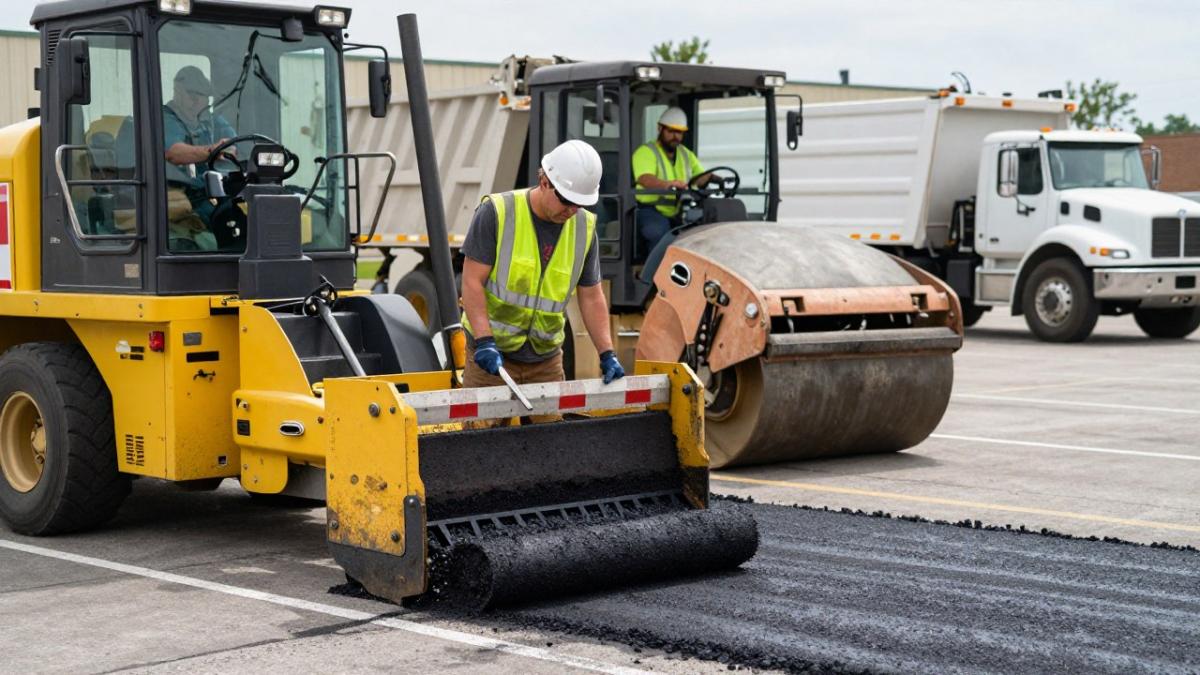
What can delay a paving project. Most schedule slippage comes from a short list of causes:
- Excavation and base repairs. Removing failed pavement or replacing soft subgrade adds hours to days. A base that pumps or deflects under a loaded truck is not ready for asphalt.
- Drainage work. Adding or re-grading a swale, catch basin, or French drain must happen before paving, and it is often the longest single add-on.
- Weather. Rain on an unprepared base or fresh asphalt stops work. Hot-mix plants also slow production in cold weather because mix cools too fast to compact.
- Material delivery. A plant backlog or truck breakdown idles the paver.
- Site complexity. Tight access, steep grades, and utility covers slow every phase.
Base preparation is the phase that most often stretches a schedule. For a detailed schedule, see our guide on how to plan an asphalt paving project timeline. Property managers worried about slippage should read our tips on avoiding paving contractor project delays. Commercial readers can go deeper on how to prepare a commercial lot for asphalt paving.
Typical durations of asphalt paving project phases
How Long Does It Take to Pave a Driveway?
A typical residential asphalt driveway takes one to two days of crew work, plus a few days of site prep before that. Project size drives the range, and the table below shows how scope changes the estimate.
| Project scope | Crew time (paving) | Total timeline including prep |
|---|---|---|
| Small driveway (under about 500 sq ft), easy access | Half a day to 1 day | 2 to 3 days |
| Standard driveway (about 500 to 1,000 sq ft) | 1 to 2 days | 3 to 4 days |
| Large driveway (over about 1,000 sq ft) or extra base work | 2 to 3 days | 4 to 6 days |
| Small parking area or commercial lot | 2 to 5 days | 1 to 2 weeks |
Thickness matters too: a thicker asphalt mix takes longer to place and compact, and full excavation of the old surface adds a day before paving starts. Access is the other wildcard, a narrow, gated, or steep approach slows every load.
Homeowner preparation and access checklist. The crew’s clock starts when the site is ready, so handle these before day one:
- Move all vehicles, trailers, and equipment off the driveway and out of the work area.
- Clear the site of basketball hoops, planters, trash cans, and anything the crew would have to move.
- Arrange alternate parking and access for the curing window, not just the paving days.
- Trim low branches and confirm gate widths so trucks and the roller can get in.
- Mark irrigation heads, sprinkler lines, and any private utilities in the work area.
- Keep children and pets off the site during grading and paving.
How to get a project-specific estimate. No article can give an exact duration, because the answer depends on your site. When you call a contractor, have these details ready: the driveway’s length and width, the existing surface (gravel, old asphalt, or concrete), its condition, whether drainage is a problem, and how much base work you expect. A contractor who asks those questions is building a real schedule; one who quotes a flat number without them is guessing.
For a step-by-step walkthrough of the installation itself, see our guide on how to install an asphalt driveway.
How Soon Can You Drive on Fresh Asphalt?
New asphalt is usually walkable within 24 to 48 hours and open to passenger cars after 48 to 72 hours. Full cure takes far longer, often six to twelve months.
“Dry” and “cured” are not the same thing. Asphalt cools and hardens quickly, but the surface keeps curing for months as oils work out of the mix.
During the first weeks, watch for:
- Tire marks from turning or braking sharply
- Surface scuffs from heavy vehicles or equipment
- Debris left sitting on soft spots
Keep heavy vehicles off fresh asphalt longer than passenger cars. Open to light traffic first, then trucks once the surface has set. Once you know your timeline, the next step is a professional quote, and our guide on how to get a professional asphalt driveway quote explains what to ask.
Planning around fresh asphalt comes down to one thing: knowing your timeline before the crew arrives. Request a quote from All-Tech Asphalt Paving, LLC. to put a firm timeline on your next paving project.
Frequently Asked Questions
How soon can you walk on newly paved asphalt?
Most asphalt paving crews allow foot traffic on a fresh surface once it has cooled enough to hold firm, usually within 24 to 48 hours. That window depends on air temperature, sun exposure, and pavement thickness. In hot weather, the surface stays soft longer, so keep foot traffic off until the contractor confirms it is safe. For a home or office complex, plan alternate walking routes for at least a day after the crew leaves.
Can you drive on fresh asphalt right after paving?
No. Passenger cars should stay off new asphalt for at least 24 to 72 hours, and heavier vehicles need more time. Fresh asphalt needs to cool and set before it can handle tire loads without marking or rutting. Turning and braking put the most stress on a new surface, so avoid both during the first few days. Ask your paving contractor for a specific access date based on the mix and weather.
How long does asphalt take to fully cure?
Asphalt cools within hours but keeps curing for six to twelve months. During that period the surface hardens and darkens, and it stays more vulnerable to tire marks, turning scuffs, and heavy loads. Keep heavy vehicles off the pavement and avoid sharp turning or braking in the first months. Full cure depends on weather conditions, pavement thickness, and traffic, so follow your contractor’s guidance on when to resume normal use.
