
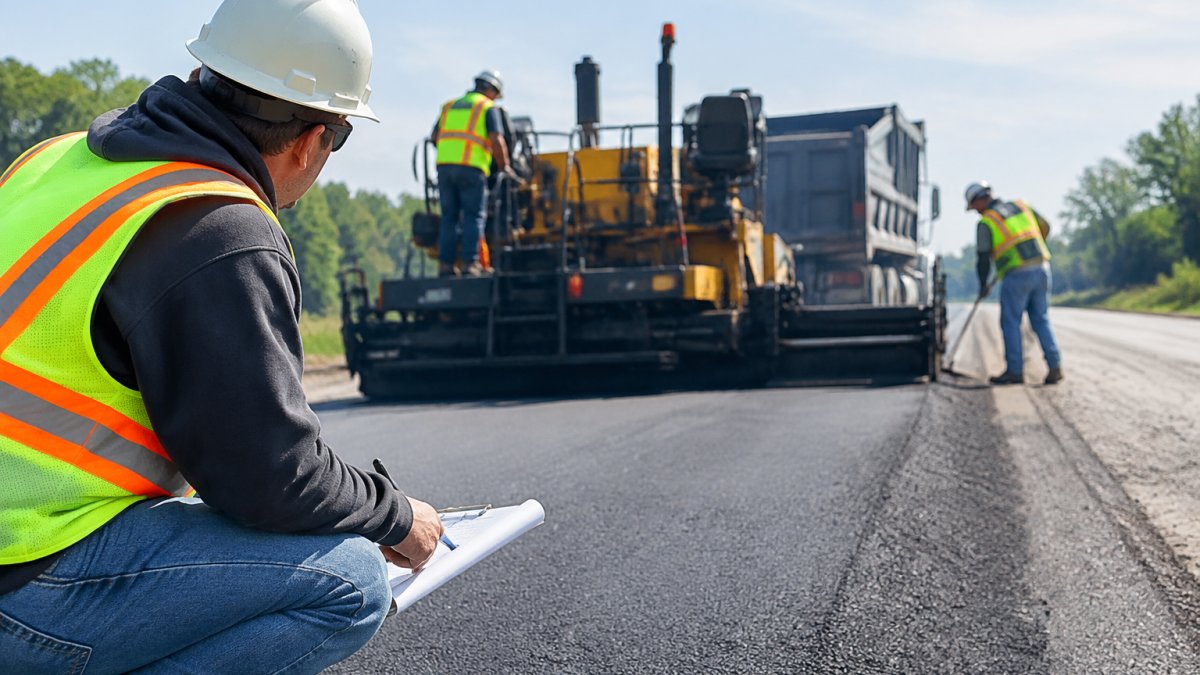
Avoiding Paving Contractor Project Delays: A How-To Guide
Last Updated: November 4, 2026
Quick Summary
Avoiding paving contractor project delays requires building a realistic timeline around the critical path, verifying site conditions before work starts, and planning for weather and curing. Delays usually build up from small gaps in planning, site readiness, and communication, so agreeing on a clear schedule and reporting rhythm early helps keep the job on track.
- Verify site conditions such as soft spots, utilities, and drainage before setting the schedule.
- Build the timeline backward from the required completion date and map each phase’s dependencies.
- Ask where float is built in, since a tight schedule has no room for the first unexpected rain.
- Build weather allowances and drying days into the plan, not just rain days.
- Agree on a weekly progress update and same-day notice for anything threatening the critical path.
Table of Contents
- Building a Realistic Asphalt Paving Project Timeline
- Scheduling Around Weather and Asphalt Curing
- Site Preparation for Asphalt Paving: Where Most Delays Start
- Commercial Paving Contract Clauses That Protect the Schedule
- Keeping Communication and Progress Tracking on Track
- Requesting a Schedule Review From All-Tech Asphalt Paving
- Frequently Asked Questions
Avoiding paving contractor project delays starts with knowing where the schedule usually breaks, and at All-Tech Asphalt Paving, LLC., the same few causes tend to recur on delayed paving projects. Most delays are not caused by one dramatic event.
A paving job often falls behind not because of crew skill but because the sequence of work depends on many moving parts: trucks, material deliveries, compaction equipment, weather windows, and inspections. When one link slips, everything behind it slips too.
Several patterns show up on almost every delayed project:
- Site conditions were not verified before the schedule was set
- Material deliveries were not confirmed against the crew calendar
- Weather contingencies were not built into the plan
- Change requests arrived mid-project without a schedule impact review
- Progress updates were sporadic, so problems surfaced late
A common mistake is treating the schedule as a single date instead of a chain of dependencies. Owners often hear “we’ll be done in two weeks” and stop asking questions.
Watch out: a schedule that looks tight on paper usually has no room for the first unexpected rain. Ask your contractor where the float is built in.
Building a Realistic Asphalt Paving Project Timeline
A realistic asphalt paving project timeline breaks the job into phases, assigns durations based on site conditions, and identifies the critical path.
We recommend building the timeline backward from your required completion date. Start with the final striping and inspection, then work back through paving, base preparation, and mobilization. This shows immediately whether the target date is achievable with the available crew and equipment.
A practical timeline usually includes these phases:
- Mobilization and site walk
- Demolition or milling of existing surface, if needed
- Subgrade preparation and compaction
- Base course placement
- Asphalt placement and compaction
- Curing and traffic control
- Striping, markings, and final inspection
Every phase should show its dependencies. For example, paving cannot start until the base passes compaction testing, and striping cannot start until the surface has cured enough to accept paint. Mapping these links shows which tasks control the finish date.
Plan for float at the end of the critical path. A few days of buffer protects the schedule from small problems without padding the budget. Owners who ask for a timeline with visible float usually get a more reliable finish.
The article’s key scheduling phases, with the check each one needs before the next phase starts:
| Phase | Start condition | Finish condition |
|---|---|---|
| Mobilization and site walk | Contract and schedule agreed | Site walked and conditions verified |
| Demolition or milling | Site access confirmed | Existing surface removed, if needed |
| Subgrade preparation | Utilities marked | Subgrade compacted |
| Base course placement | Subgrade prepared | Base passes compaction testing |
| Asphalt placement | Base passes compaction testing | Surface placed and compacted |
| Curing and traffic control | Asphalt placed | Surface cured enough to accept paint |
| Striping and final inspection | Surface cured | Striping done and project inspected |
Scheduling Around Weather and Asphalt Curing
Weather and asphalt curing are two factors that can change a paving schedule without warning. Asphalt is a temperature-sensitive material: it must be placed and compacted within a workable temperature range, and rain can halt paving entirely until the surface dries. A schedule that does not name these constraints in advance is a schedule that will absorb them as surprise delays.
Build weather into the plan rather than reacting to it. Identify the typical weather pattern for your build season, and schedule the most temperature-sensitive work, surface course placement and compaction, during the most reliable windows.
A practical weather plan covers four things:
- Temperature windows. Asphalt mix has a minimum placement and compaction temperature, and ambient air and surface temperatures affect how quickly it drops out of the workable range. Ask your contractor what minimum air and surface temperatures they require before placing surface course, and how they handle a day that starts cold and warms slowly.
- Rain and surface moisture. Paving cannot proceed on a wet base or a wet existing surface. Rain does not just cost the rain hours; it costs the drying time after. Build drying days into the plan, not just rain days.
- Seasonal cutoffs. Many paving operations slow or stop in cold months because mix plants and compaction equipment cannot reliably hit spec. Confirm the contractor’s seasonal cutoff and whether your completion date depends on work that must happen before it.
- Wind and mat cooling. On cool or breezy days, the asphalt mat cools faster, shrinking the compaction window. Crews compensate with shorter haul distances, more trucks, or adjusted rolling patterns, all of which affect the day’s production rate and therefore the schedule.
Curing matters too. Newly placed asphalt needs time before it can carry heavy loads or accept striping, and rushing traffic onto it can damage the surface.
Agree in writing on how weather days will be recorded and communicated. The useful record is not “it rained” but a dated log showing the phase affected, the hours lost, the drying time required, and the schedule impact.
Watch out: a schedule that shows no weather allowance in a season with predictable afternoon storms is not optimistic, it is incomplete, and the first storm will consume float that was never there.
Site Preparation for Asphalt Paving: Where Most Delays Start
Site preparation is where most asphalt paving delays begin, because problems hidden under the surface rarely show up until the crew is already mobilized. Learn how to prevent premature asphalt failure in Houston lots, which often traces back to poor preparation. Poor subgrade, buried utilities, and drainage issues can each stop work for days.
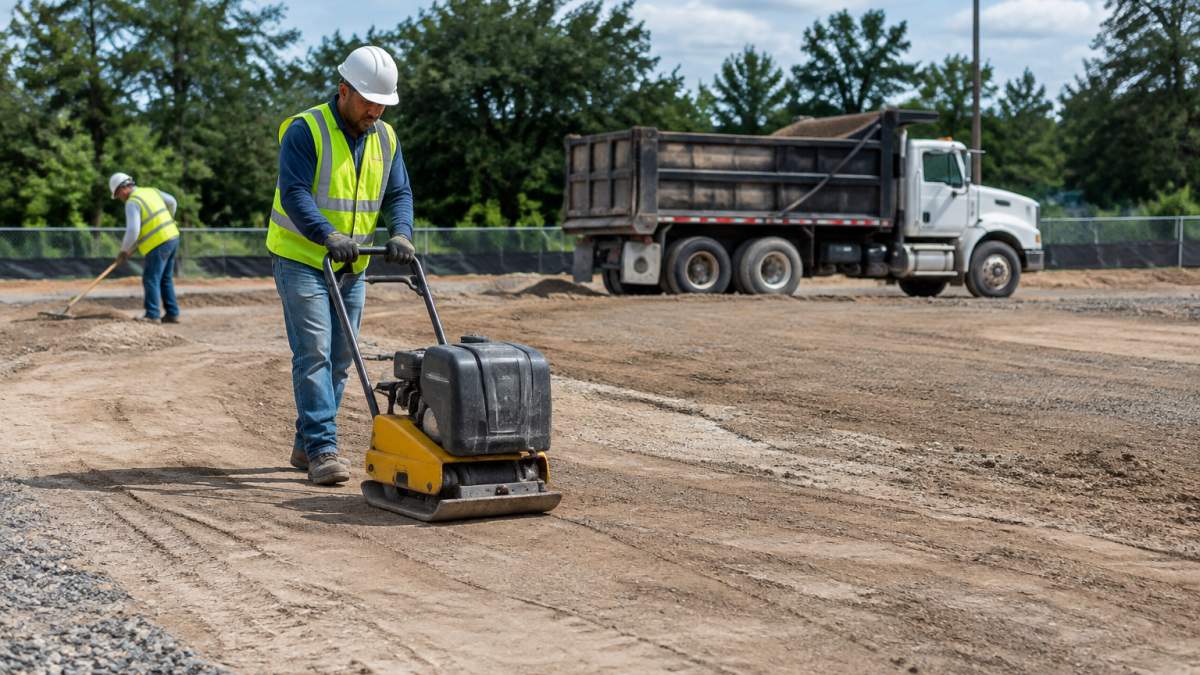
A thorough site survey before the schedule is set prevents much of this. Look for soft spots, existing base failure, standing water, and conflicts with underground lines. Verifying these conditions early lets the contractor adjust the sequence instead of discovering them mid-job.
Common site problems include:
- Unstable subgrade that needs additional excavation or stabilization
- Utility lines not marked accurately before excavation
- Drainage slopes that do not direct water away from the new surface
- Access restrictions that limit truck and equipment movement
Watch out: skipping or rushing site prep to save a day usually costs more time later, when a failed base has to be repaired under a finished surface.
Commercial Paving Contract Clauses That Protect the Schedule
Contract language shapes how delays are handled, so the right clauses protect both the owner and the contractor. Clear terms make it easier to resolve schedule problems before they become disputes.
Look for these provisions in your agreement:
- A defined schedule with milestone dates and a critical path summary
- Clear rules for weather delays and how days are documented
- A change order process that states how schedule impacts are priced and approved
- Responsibilities for site access, utility locates, and permits
- Notice requirements for delays, with timelines for response
Ask your contractor to walk through each clause before signing. A common mistake is accepting a generic contract that says nothing about delays, then having no agreed process when problems occur.
Keeping Communication and Progress Tracking on Track
Regular communication keeps small schedule problems from becoming large ones, but “communicate more” is not a plan. The projects that stay on schedule share a specific reporting rhythm, a small set of tracked metrics, and a shared record both sides can see.
Set the rhythm at the start.
Useful updates cover a consistent set of items:
- Planned versus actual progress by phase, not just overall percent complete
- Weather days used against weather days allowed
- Upcoming work and the start conditions it depends on
- Open issues, owner decisions needed, and their due dates
- Change requests in progress and their schedule impact
Progress tracking works best when it is visible and shared.
Technology helps if it is matched to the work. Many paving contractors use a simple set of tools for scheduling, daily field logs and photos, and shared project documents. Ask your contractor what they use and whether you will have view access.
Watch out: a project with no agreed reporting cadence tends to communicate in bursts, silence followed by a problem. By the time the problem is raised, the cheapest window to fix it has usually closed.
Requesting a Schedule Review From All-Tech Asphalt Paving
If your paving project is at risk of falling behind, a schedule review is a practical first step. A schedule review can look at your timeline, site conditions, and contract terms to identify where the critical path is exposed. For a full range of paving services, see our services. To start that conversation, contact our team and ask for a schedule review.
If you are planning a larger job, our guide to booking a commercial paving consultation walks through what to prepare. For a detailed walkthrough of building the schedule itself, see how to plan an asphalt paving project timeline.
Frequently Asked Questions
How do I avoid delays in a paving project?
Start with a written schedule that lists each phase, including site prep, base work, paving, and curing windows. Confirm material delivery dates with your supplier, and build weather days into the plan. Require the contractor to submit a look-ahead schedule each week so you can spot slippage early. Holding short weekly progress meetings with the site superintendent makes it easier to resolve problems before they push the completion date back.
What are considered excusable delays in asphalt paving?
Excusable delays are usually events outside the contractor’s control, such as severe weather, unforeseen subsurface conditions, changes in scope requested by the owner, or delays in permit approvals. Most commercial paving contracts define these in a force majeure or delay clause. Contractors generally need to give written notice within a set period to claim time extensions, so review the notice requirements before a delay happens.
How does site preparation affect paving project timelines?
Site preparation is often where schedules slip most. Unexpected soft spots, poor drainage, buried utilities, or inadequate subgrade compaction can force the crew to stop and rework the base. Completing a thorough site survey, utility locates, and proof-rolling before paving begins reduces these surprises. Clear, compacted subgrade allows the paving crew to move in on the planned date.
What should a paving contract include to prevent delays?
A strong commercial paving contract should include a detailed project schedule with milestones, clear definitions of excusable and non-excusable delays, liquidated damages or other remedies for late completion, change order procedures with time impact requirements, and specific obligations for both the contractor and the owner. Documenting site access dates, material approvals, and responsibility for utility coordination also prevents disputes that cause delays.
Avoiding paving contractor project delays comes down to planning the sequence carefully, verifying the site early, and keeping communication steady. All-Tech Asphalt Paving, LLC. builds those steps into every project, with owned concrete mixer trucks and specialized excavation equipment that support reliable production rates. Reach out to request a quote and a schedule review for your next project.
