
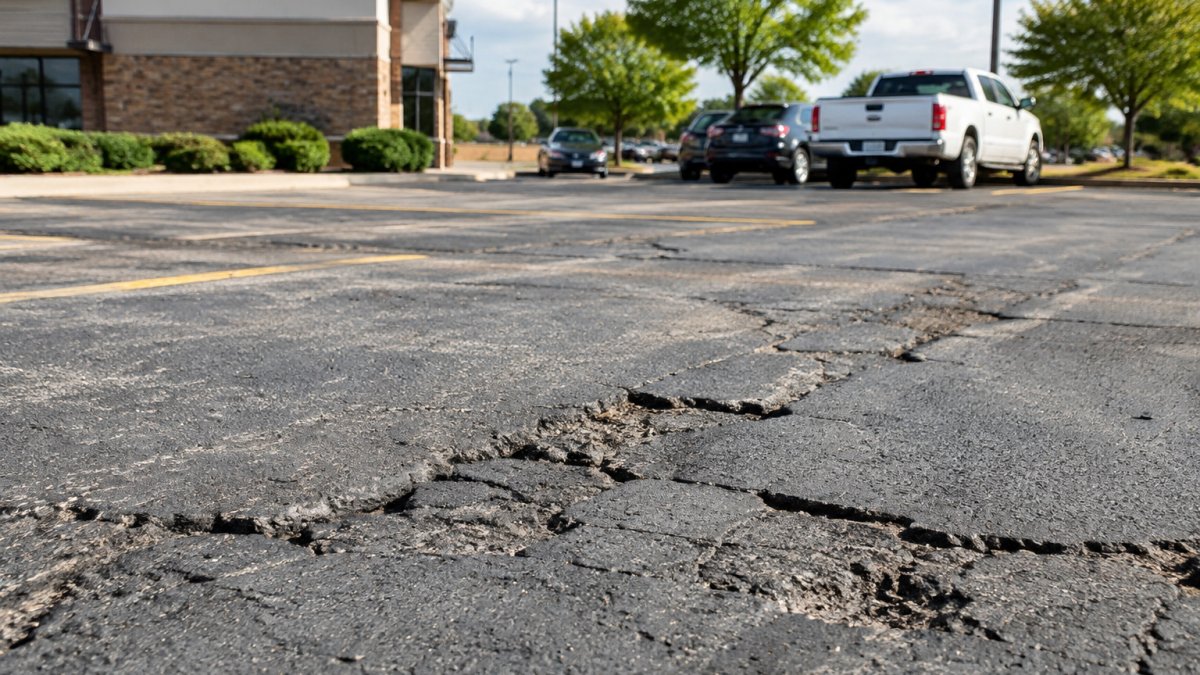
How to Prevent Premature Asphalt Failure in Houston Lots
Last Updated: November 4, 2026
Quick Summary
Premature asphalt failure is prevented mainly by controlling water, since drainage problems cause more early failure than anything else. Walk the surface after heavy rain, fix slopes that lead toward buildings, clear clogged drains and reseal cracks so water cannot reach the base.
- Look for alligator cracking, raveling, standing water and edge breakdown as early warning signs.
- Check that pavement slopes at least 1% to 2% away from buildings.
- Clear clogged storm drains, curb cuts and gutters before winter rain.
- Inspect for cracks, potholes and drainage issues every spring.
- Consider a sealcoat application every 2 to 3 years.
Table of Contents
- Identifying Asphalt Pavement Failure Causes Before They Spread
- Step-by-Step: Fixing Asphalt Drainage Problems
- Building a Maintenance Schedule and Deciding Between Repair and Replacement
- Frequently Asked Questions
Premature asphalt failure is one of the most expensive problems a Houston property owner can face. Potholes, alligator cracking and standing water start small, then spread fast. This guide explains how to prevent premature asphalt failure before it turns into a full rebuild.
Asphalt is flexible, but it does not last forever. Water, heat and heavy traffic wear it down, and most early failures trace back to a few preventable causes.
Identifying Asphalt Pavement Failure Causes Before They Spread
Start by looking for the warning signs. Catching them early keeps repairs small and cheap.
Check your lot or driveway for these problems:
- Alligator cracking: Interconnected cracks that look like chicken wire
- Raveling: Loose aggregate and rough, sandy patches
- Standing water: Puddles that last more than a day after rain
- Edge breakdown: Crumbling pavement along the borders
Each sign points to a cause. Water that sits too long often leads to sub-base damage. Oxidation from sun exposure dries out the surface and makes it brittle (Index – The Asphalt Binder Oxidative Aging Chemo-Mechanical Model , May 2018).
For repair signs Houston owners commonly miss, read 5 Asphalt Driveway Repair Signs Houston Homeowners Miss. To compare materials that hold up in this climate, see What Are the Best Asphalt Paving Materials for Durability?
Step-by-Step: Fixing Asphalt Drainage Problems
Drainage causes more premature failure than almost anything else. Follow these steps to fix it:
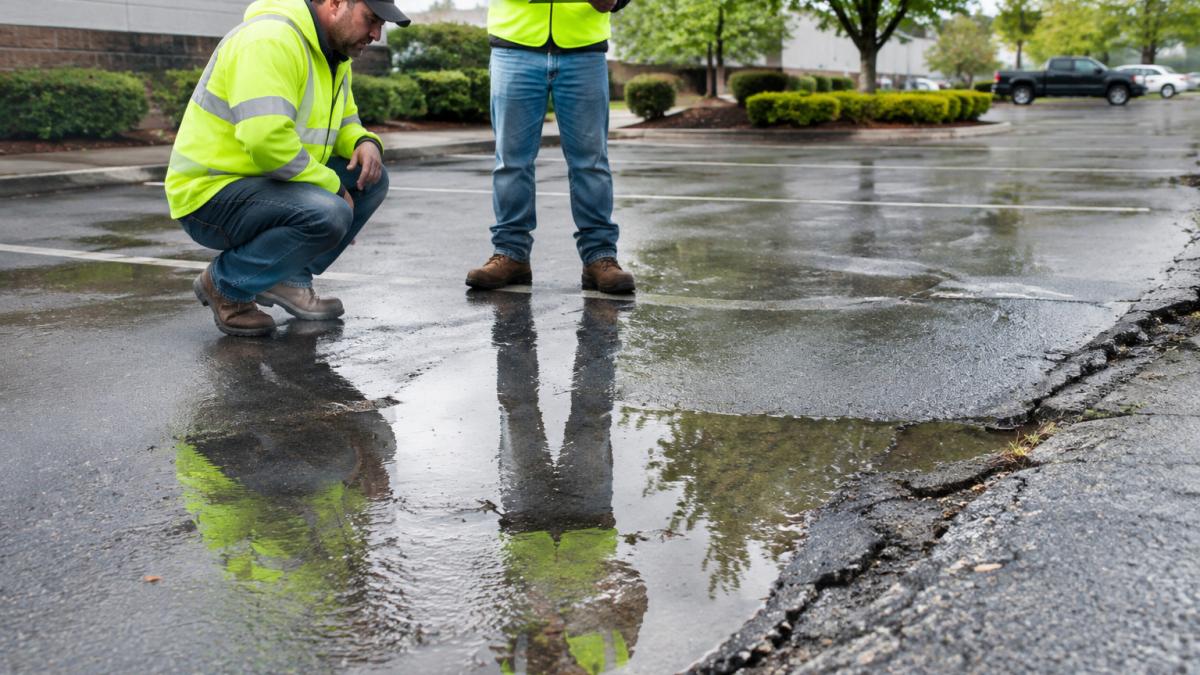
- Walk the surface after a heavy rain and mark every puddle.
- Check that the pavement slopes at least 1% to 2% away from buildings.
- Clear clogged storm drains, curb cuts and gutters.
- Fill low spots with a patch mix, then compact it.
- Reseal cracks so water cannot seep into the base.
Watch out: filling a low spot without fixing the slope just traps water again.
Drainage causes more premature failure than almost anything else, so follow these steps to fix it:
| Step | What to do | Timing or detail |
|---|---|---|
| 1 | Walk the surface and mark puddles | After a heavy rain |
| 2 | Check the pavement slope | At least 1% to 2% away from buildings |
| 3 | Clear storm drains, curb cuts and gutters | Clogged drains removed |
| 4 | Fill low spots and compact | Use a patch mix |
| 5 | Reseal cracks | Stops water seeping into base |
Building a Maintenance Schedule and Deciding Between Repair and Replacement
Routine care stretches pavement life. A simple schedule works well:
- Every spring: Inspect for cracks, potholes and drainage issues
- Every fall: Clear debris and check drains before winter rain
- Every 2 to 3 years: Consider a sealcoat application
- Yearly: Repair cracks and joints as they appear
Repair makes sense when damage is limited to small areas; replacement is usually better when failure covers most of the surface or the base has broken down. A professional evaluation can help you decide. For what drives the cost of commercial lot work, see Commercial Parking Lot Repair Cost Factors That Drive Your Quote. Pricing depends on job size, materials and scope, so visit the All-Tech Asphalt Paving, LLC. website for current prices or a quote tailored to your property.
Frequently Asked Questions
What are the most common causes of asphalt pavement failure?
The most common causes are water infiltration, weak or poorly compacted base layers, heavy loads beyond the design rating, and oxidation that makes the surface brittle over time. Water is usually the root problem: it softens the base, undermines the pavement and then accelerates cracking. Early detection of alligator cracking, raveling and depressions lets you address these causes before they become full-depth failures. A professional inspection can identify which factor is driving the damage on your specific lot.
How often should asphalt pavement be inspected and maintained?
Most property managers inspect asphalt pavement at least twice a year, typically in spring and fall, and after any major storm. Routine maintenance such as crack sealing, sealcoating and pothole patching is usually scheduled every one to three years, depending on traffic volume and climate. Heavily used industrial lots may need more frequent attention. Keeping a written log of each inspection makes it easier to spot patterns and plan budgets. For current pricing, visit the All-Tech Asphalt Paving, LLC. website, since costs depend on quantity, scope and timing.
When should asphalt be repaired instead of replaced?
Repair is usually the better choice when damage is limited to isolated cracks, small potholes or surface wear, and the base remains firm. Full surface replacement becomes necessary when failure is widespread, the base has softened or settled, or drainage problems keep returning. Compare the extent of damage across the lot, not just the most visible spot. Repairs that ignore an underlying drainage or base problem tend to fail again quickly. A professional evaluation can help you weigh repair against replacement for your site.
