
Are Industrial Concrete Mixer Trucks Worth the Investment?
Quick Summary
Industrial concrete mixer trucks are worth the investment on large paving jobs that need a steady supply of fresh mix. The rotating drum keeps the batch consistent and workable from plant to pour, so crews can place and finish on schedule. Their value depends on matching truck count, haul distance and pour rate.
- The drum keeps aggregate, sand, cement and water blended, so batches reach the forms with uniform properties.
- Throughput depends on the full cycle: loading, travel, discharge and return, not drum volume alone.
- Once the drum turns, the batch has a finite window before it stiffens, so delivery must match placement capacity.
- Volumetric units suit projects needing several mix designs or small quantities at different points on site.
- Plan for OSHA work-zone and heavy equipment requirements, and confirm placement timing before the truck leaves the plant.
Table of Contents
What Industrial Concrete Mixer Trucks Do on a Paving Project
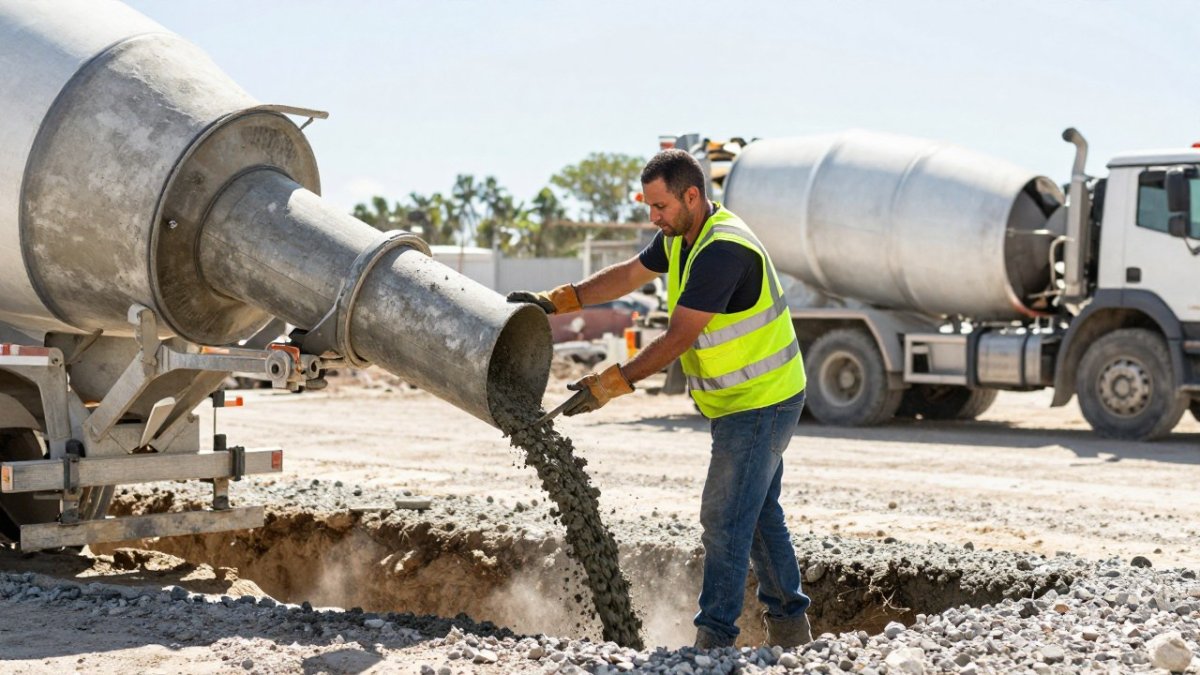
Industrial concrete mixer trucks are the backbone of any large paving job that needs a steady supply of fresh mix. Concrete mixer trucks keep a batch turning in the drum from the plant to the pour, so the concrete arrives workable and ready to place. For parking lots, loading docks and industrial pads, that continuous supply often decides whether a crew finishes on schedule.
On a typical project, the truck’s job is to deliver consistent mix to the forming area at the rate the crew can place and finish it. A common mistake is treating the truck as a simple transport vehicle. The drum is also a mixing tool, and keeping the mix moving protects its workability between the plant and the pour.
Mixing Consistency and Concrete Quality Control
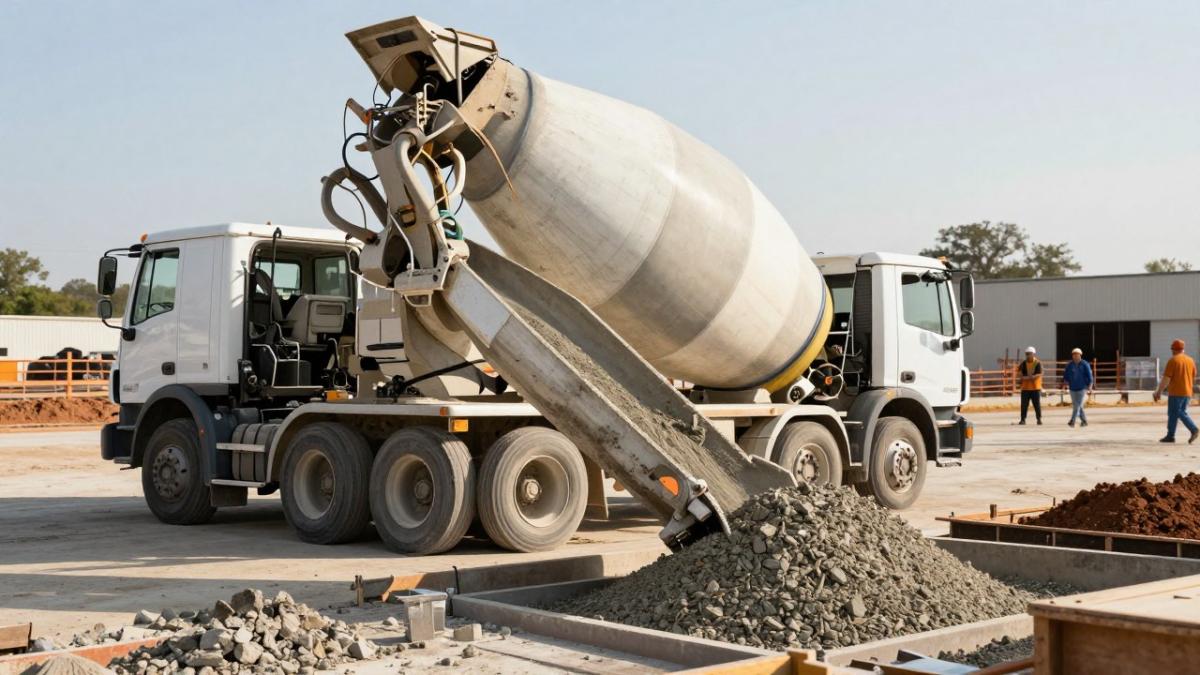
Consistency is where a mixer truck earns its place on a job. A rotating drum keeps aggregate, sand, cement and water blended so the batch reaches the forms with uniform properties. Mix consistency matters because uneven batches produce uneven slabs, and those flaws show up later as cracking and surface wear.
Quality control starts before the truck leaves the plant.
Ready-Mix Concrete Mixer Trucks Versus Volumetric Units
Ready-mix concrete mixer trucks carry a pre-blended batch from a central plant to the site. Volumetric units work differently: they carry the dry materials and water separately and mix them on site, producing the batch only when it is needed. Both approaches deliver concrete, but they suit different schedules and job sizes.
The ready-mix model suits most jobs with a predictable pour schedule and nearby plant access. The main limit is the clock. Once the drum is turning, the batch has a finite window before it stiffens, so delivery timing has to match placement capacity.
Where Volumetric Mixing Adds Value
Volumetric mixing becomes useful when a project needs several mix designs or small quantities at different points across the site. Producing exactly the amount required reduces leftover material, and it gives the crew flexibility to change the mix as conditions change. The trade-off is that on-site mixing demands careful control of materials and a trained operator.
Concrete Mixer Truck Capacity and Throughput
Capacity is the variable most buyers underestimate. A truck’s drum volume sets the size of each load, but throughput depends on the full cycle: loading, travel time, discharge and return. A fleet sized only by drum volume can still fall behind a crew that places concrete faster than expected.
The right number of trucks depends on the pour rate, the haul distance and the plant’s turnaround time. An owned fleet gives a project manager direct control over that cycle, which matters most on large pours where a single delayed load can disrupt the whole placement.
How Long Concrete Can Stay in a Mixer Truck
Concrete does not wait indefinitely in the drum. Once water meets cement, hydration begins, and the mix gradually loses workability. How long a load stays usable depends on the mix design, temperature, admixtures and the time spent in transit.
Hot weather shortens the window considerably, while cooler conditions extend it. Crews should confirm placement timing with the plant before the truck leaves, rather than discovering a problem at the forms. The safest assumption is that the clock starts at batching, not at discharge.
Total Cost of Ownership, Maintenance, and Safety Trade-Offs
Safety also belongs in the cost picture. Rotating drums, heavy loads and active job sites call for clear traffic control, trained operators and adherence to OSHA requirements for work zones and heavy equipment. Planning for these early prevents delays that a schedule cannot absorb.
Scheduling Your Next Pour With a Fleet That Stays on Time
Schedule reliability comes down to coordination: matching the plant’s output, the truck count and the crew’s placement rate. A few practical steps help.
If you are planning a pour and want to talk through capacity and timing, contact our team to confirm availability. For the broader picture of how specialized equipment fits into a project, read our article on the benefits of specialized paving machinery, and for avoiding slowdowns, see our guide to avoiding paving contractor project delays.
For cost questions, review our services to compare what we offer against your budget. Pricing depends on quantity, schedule and delivery distance, so a site-specific quote gives the most accurate number.
Get a quote from All-Tech Asphalt Paving, LLC. and keep your next pour on schedule.
Frequently Asked Questions
How long can concrete be in a mixer truck?
Concrete is kept in a mixer truck for a limited window from batching to discharge, and the exact time depends on the mix design and conditions. Hot weather shortens that window because water evaporates and the mix begins to set faster. Rotating the drum keeps the load workable during transit, but the drum does not stop the hydration clock. Contractors planning a pour should confirm truck arrival times and discharge schedules before the load is batched so the mix can be placed while it is still workable.
How many cubic yards can a concrete mixer truck carry?
Load capacity varies by truck size, chassis and drum, and the practical load depends on the rules that apply on public roads. Matching the load size to the pour volume reduces the number of trips and the risk of a partial load sitting on site.
What is the difference between a ready-mix and a volumetric concrete mixer truck?
A ready-mix truck batches concrete at a plant and delivers it already mixed, with the drum rotating to keep the load workable during transit. A volumetric mixer carries dry materials and water separately, then mixes the batch on site in the drum, which lets crews produce fresh concrete in the exact quantity and mix design needed. Volumetric units suit smaller or staged pours, while ready-mix trucks suit large continuous placements where a single delivery schedule matters most.
What are the main benefits of using a concrete mixer truck on a commercial project?
The main benefits are consistent mix quality, faster placement, and fewer labor hours compared with hand-mixing or small site mixers. A dedicated mixer truck keeps the batch uniform from start to finish, reduces material waste from over-ordering, and lets crews adjust the mix on demand.
