
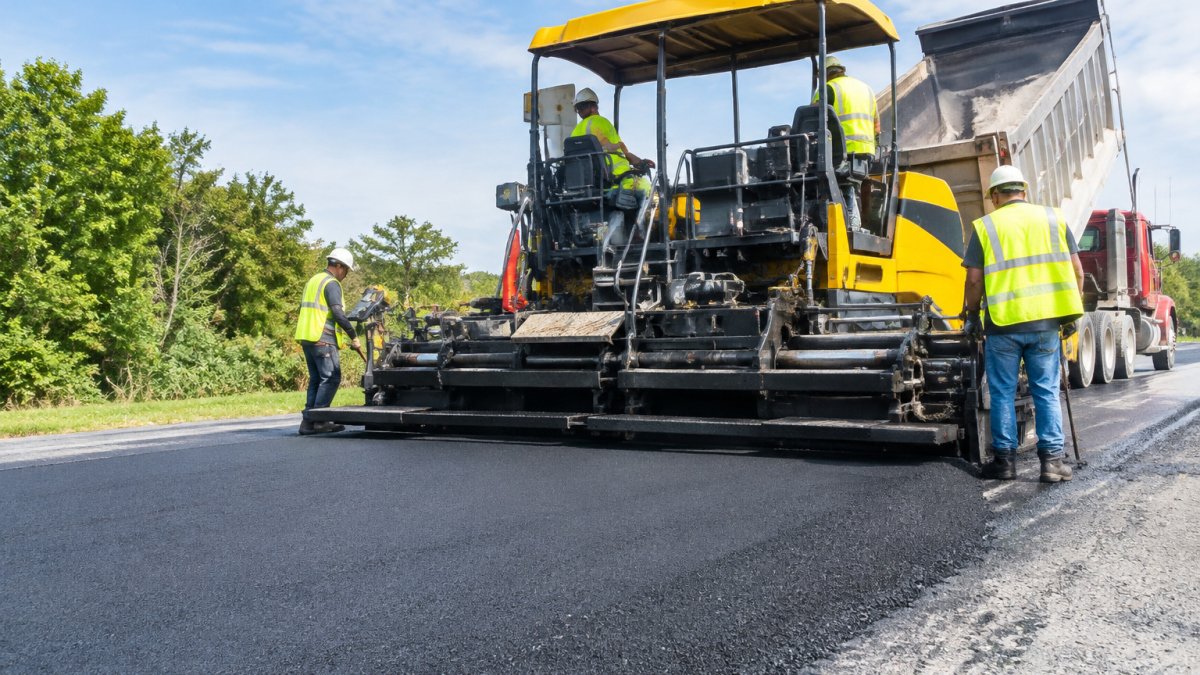
7 Benefits of Specialized Paving Machinery for Your Project
Last Updated: November 8, 2026
Quick Summary
Specialized paving machinery delivers control that hand crews cannot match, holding grade, thickness, and speed to tight tolerance so commercial lots and roadways stay on schedule and are built for durability. A paver, milling machine, roller, and transfer vehicle each own a stage of the job, and the line only pays off when the machines are planned to move as one unit.
- A paver lays a controlled mat at set depth on grade references, repeating the same result pass after pass.
- A milling machine grinds the worn surface to a controlled depth, leaving a textured profile for a mechanical bond.
- A material transfer vehicle remixes mix and feeds the paver steadily, preventing cold joints and segregation.
- A commercial parking lot typically needs a paver, tandem roller, and milling machine for transition areas.
- A rental quote rarely covers fuel, wear parts, damage, or operator training, and rework can exceed the rental savings.
Table of Contents
- Why Paving Machinery Beats Hand Work on Grade and Speed
- Asphalt Paving Equipment Types and What Each One Does
- Inside the Asphalt Paver Machine: Screed, Width, and Mat Thickness
- The Asphalt Milling Machine and Surface Preparation Stage
- Compaction, Coordination, and the Quality Metrics That Decide Longevity
- Asphalt Paver Rental vs. Hiring a Paving Contractor
- Frequently Asked Questions
Why Paving Machinery Beats Hand Work on Grade and Speed
Hand work has a place on small patches and tight repairs. On any commercial lot or roadway, though, the benefits of using specialized paving machinery come down to one thing: control. Machines hold grade, thickness, and speed to a tolerance a rake and shovel crew cannot match. Specialized equipment is one way paving projects can be kept on schedule and built for durability. Readers can see how the full sequence comes together in this guide to planning an asphalt paving project timeline.
What a Paver Actually Does Differently
A paver does not just spread asphalt. It lays a controlled mat at a set depth while riding on grade references, so the surface profile stays consistent across the full width of the pass. Manual crews eyeball depth and fight the mix as it cools. The machine repeats the same result pass after pass, which is where uniformity and smoothness begin.
Federal Highway Administration pavement resources
That consistency carries straight into the compaction stage. A uniform mat compacts evenly. An uneven one leaves soft spots that show up as ruts within a season or two.
Asphalt Paving Equipment Types and What Each One Does
Asphalt paving equipment types split into four working groups, and each one owns a stage of the job. The paver places material, the milling machine removes it, the roller compacts it, and the material trucks and transfer vehicles feed the whole line. Skip one and the others lose their advantage.
| Equipment | Job on Site | Why It Matters |
|---|---|---|
| Asphalt paver machine | Places and screeds the mat | Holds depth and width |
| Milling machine | Removes worn surface | Creates a clean bond |
| Roller | Compacts the mat | Locks in density |
| Transfer vehicle | Feeds the paver | Keeps speed steady |
What Each Machine Actually Does
A paver is not a dump truck with a screed bolted on.
A milling machine is the reverse operation. A rotating drum with carbide teeth grinds the worn surface to a controlled depth, and the machine’s conveyor loads the millings into a truck.
A roller is a compaction tool, not a smoothing tool. Steel-drum rollers work breakdown and intermediate passes on asphalt, while pneumatic-tire rollers knead the mat and help close surface voids.
A material transfer vehicle (MTV) is the least understood machine in the line. It receives mix from trucks, remixes it to break up segregation, and feeds the paver at a steady rate.
Matching Machines to Project Scale
Not every job needs the full line. A residential driveway patch may only justify a walk-behind roller and a hot box. A commercial parking lot typically needs a paver, a tandem roller, and a milling machine for the transition areas. A highway overlay needs the full set plus an MTV and a pneumatic roller. The right question is not which machine is best but which combination matches the job’s tonnage, access, and quality spec.
How the Line Works Together
Coordination between these machines is the piece most guides miss. A paver running fast while the roller lags behind produces a cold mat that will not compact properly. A milling machine cutting deeper than the paver can fill leaves a step at the joint. An MTV that runs dry stalls the paver and creates a cold joint mid-lane. The equipment only pays off when the line moves as one unit, and that is a planning problem as much as an equipment problem.
Watch out: a crew that owns every machine but schedules them independently will produce worse results than a smaller crew that plans the sequence from mill to roll.
Inside the Asphalt Paver Machine: Screed, Width, and Mat Thickness
The screed is the working heart of the asphalt paver machine. It floats behind the tractor unit, levels the mix, and sets mat thickness and surface profile in a single motion.
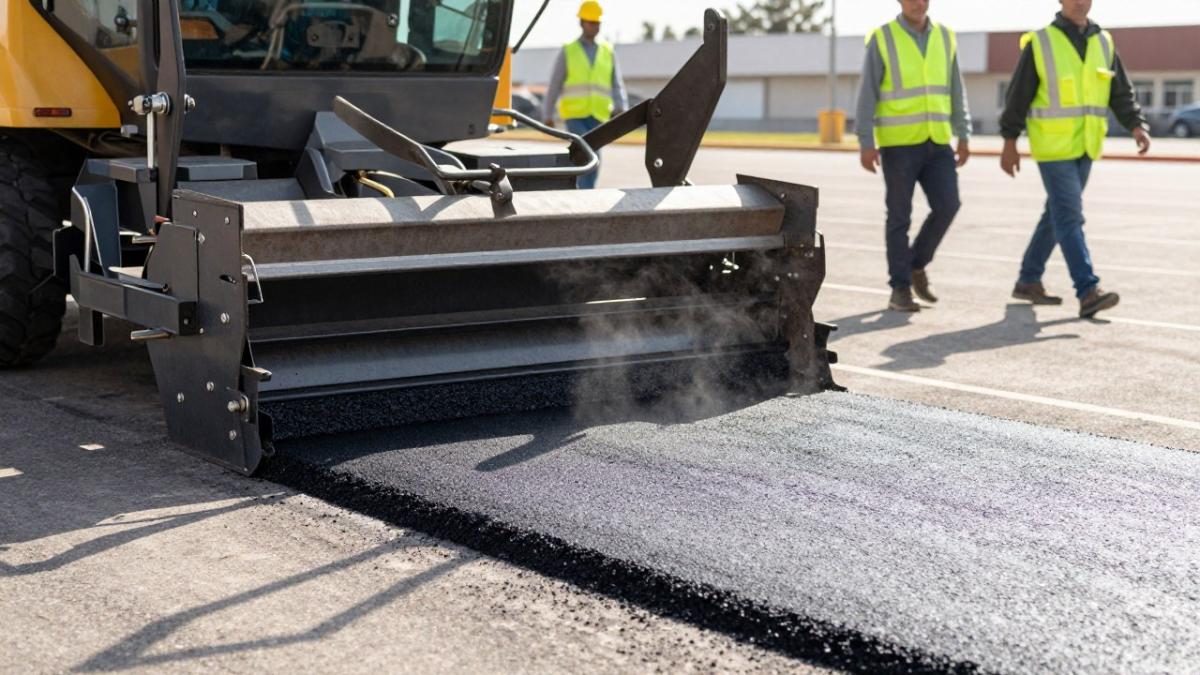
Mat thickness and material choice are linked. A thicker lift suits heavier traffic loads, while the mix design determines wear resistance and slip resistance. Readers comparing options can check which asphalt materials deliver durability before the paver ever arrives on site.
The Asphalt Milling Machine and Surface Preparation Stage
Surface preparation decides how long the new pavement lasts. An asphalt milling machine grinds away the worn top layer to a controlled depth, leaving a textured profile the fresh mat can bond to. That bond is what prevents the new surface from peeling or sliding under traffic.
Material quality belongs in this stage too. Milling exposes the base, and any weak spots show up before the paver moves in. Verifying the mix before it goes down is the other half of the job, and our guide on checking asphalt material quality covers what to look for.
Compaction, Coordination, and the Quality Metrics That Decide Longevity
Compaction is where density becomes durability. A roller works the mat while it is still hot, closing the mix and driving out air voids. Density, smoothness, and surface consistency are the three metrics that predict how the pavement will perform years later.
Precision here depends on timing as much as equipment. The roller must follow the paver closely enough to compact at the right temperature. That handoff is why integrated equipment coordination matters more than any single machine. A crew that plans the whole line, from milling through rolling, controls the outcome instead of reacting to it.
National Asphalt Pavement Association guidance
Asphalt Paver Rental vs. Hiring a Paving Contractor
Asphalt paver rental looks cheaper on paper. The real math includes operator training, safety, maintenance costs, fuel consumption, and the downtime when a rented machine breaks mid-pour. A rental without an experienced operator can cost more in rework than it saves in rental fees.
The Costs Renters Underestimate
A rental quote covers the machine and maybe delivery. It rarely covers the full picture. A typical rental agreement puts fuel, wear parts, and damage on the renter. A paver that throws a track or loses a screed heater mid-pour can stall the whole crew while the rental company dispatches a replacement, if one is available.
Operator training is the other hidden line item. A paver is not self-teaching. Screed setup, grade control calibration, auger height, and mat thickness all require experience to get right. A first-time operator tends to run the paver too fast, starve the augers, and leave a segregated mat. The rework, milling out the bad section and repaving, usually costs more than the rental itself.
What the Contractor Package Includes
Hiring a contractor shifts that risk. The equipment, the crew, and the quality control come as one package. The contractor carries the maintenance burden, the operator training, and the liability if the mat fails density or smoothness specs. For a property manager, that means one point of accountability instead of a rental counter, a separate operator, and a roller sub.
Safety and Ergonomics on the Jobsite
Paving is a heat-and-traffic job. Crews work next to 250°F to 300°F asphalt, diesel exhaust, and live traffic. A rental machine may not include those features, and a renter may not know to ask.
Watch out: renting a machine without confirming the operator’s familiarity with that specific model’s grade controls is a common way to lose a day to calibration alone.
When Specialized Machinery May Not Pay Off
A balanced answer has to include the cases where the math flips.
The decision comes down to tonnage, access, and quality spec. If the job is large enough to justify mobilization and the spec requires density and smoothness testing, the contractor package usually wins.
If you are weighing the decision, our guide on how to choose a paving company walks through the questions that separate a reliable crew from a risky one.
For property managers and facility managers ready to talk through a project, contact our team to start the conversation.
The difference between pavement that lasts and pavement that fails early usually comes down to who controls the equipment and the process.
Frequently Asked Questions
What does a paving machine do that hand work cannot?
A paving machine lays asphalt at a controlled depth and width while the screed levels the mat as it moves. That gives you uniform mat thickness, a consistent surface profile, and a paving speed a hand crew cannot match. The result is fewer high and low spots, better drainage, and a pavement that holds up under traffic. Hand work still matters for edges, tie-ins, and small repairs, but the main run of a lot or driveway should be machine-laid.
What are the main asphalt paving equipment types on a full project?
Most jobs use four groups: a milling machine for removing old surface, dump trucks for material delivery, an asphalt paver machine for placement and screeding, and rollers for compaction. Support equipment like sweepers and tack coat sprayers fills the gaps between stages. Knowing which asphalt paving equipment types are needed, and in what order, is what keeps a project on schedule and prevents cold joints between passes.
Is asphalt paver rental a good option for a property owner?
Rarely for a one-time lot or driveway. Asphalt paver rental makes sense for contractors running repeated jobs, because the machine has to be operated, fed with hot mix on a tight window, and matched with rollers before the material cools. A property manager usually gets better results by hiring a paving contractor who already owns the fleet, since rental fees, transport, and operator time add up fast on a single project. Requesting a quote from All-Tech Asphalt Paving, LLC. is the best way to confirm current pricing and project details.
How does equipment choice affect how long the pavement lasts?
Three things decide longevity: how well the base was milled and cleaned, how uniform the mat thickness is, and how quickly compaction follows placement. Paving equipment, when properly operated, supports all three. A milling machine restores the surface profile, the paver holds grade and thickness, and rollers hit density before the mix cools. Get any of those wrong and you get rutting, raveling, or early cracking, which is why a driveway can fail in a few years while a properly built one lasts decades.
