
How to Fix Alligator Cracks in Asphalt: A Practical Repair Guide
Last Updated: November 25, 2026
Quick Summary
To fix alligator cracks in asphalt, remove the cracked pavement down to solid base, clean the area, then fill and compact patch material in lifts and seal the edges. Alligator cracks are a fatigue failure, so a patch only holds if the base underneath is sound and dry.
- Alligator cracking is a fatigue failure usually driven by a weak aggregate base or subgrade.
- Cold patch is a temporary repair that does not restore structural strength.
- An overlay only works if the base is repaired first, or cracks reflect through.
- Press a screwdriver into the base; if it sinks easily or feels wet, the base has failed.
- Patching over a wet base traps moisture and guarantees the repair fails.
Table of Contents
- Causes of Alligator Cracking in Asphalt
- Best Asphalt Alligator Crack Repair: Cold Patch vs. Overlay
- Repair It Right: Prep, Patch, and Know When to Call a Pro
- Frequently Asked Questions
Causes of Alligator Cracking in Asphalt
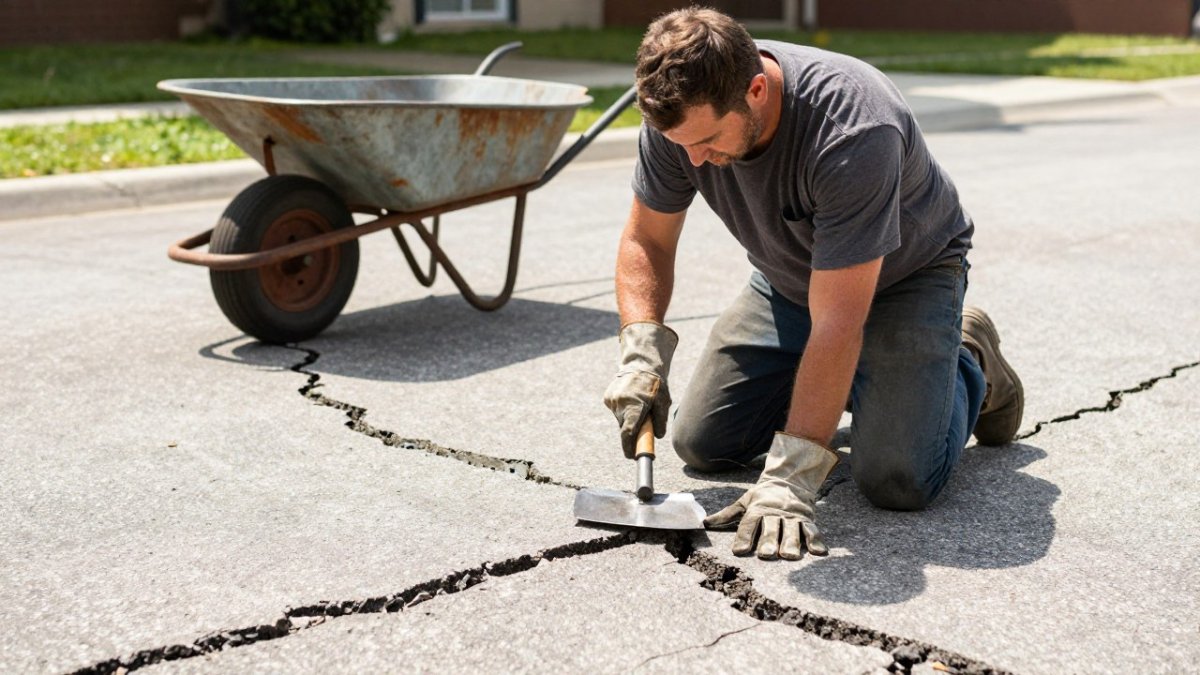
Alligator cracks are interconnected, web-like fissures that appear when the pavement underneath can no longer carry the load above it. This guide explains what causes them and how to fix alligator cracks in asphalt without wasting money on a repair that won’t hold.
Alligator cracking is a fatigue failure of the asphalt layer, usually driven by a weak aggregate base or subgrade. The surface flexes under traffic until it cracks in a grid, so filling those cracks without addressing the base is why so many repairs fail within a season. Common drivers include base failure, poor drainage, heavy traffic, aging asphalt, and oil contamination.
Asphalt Institute guidance on pavement distress classifies this as load-associated fatigue cracking, which matters because it tells you the problem starts below the surface.
If you’re seeing widespread cracking, it’s worth understanding why asphalt pavement fails prematurely. And once you know the cause, preventing driveway cracking becomes a maintenance routine rather than a guessing game.
Best Asphalt Alligator Crack Repair: Cold Patch vs. Overlay
The best repair for alligator cracks depends on how far the damage spreads: localized cracking with a sound base can often be patched, while widespread cracking usually needs an overlay or full-depth reconstruction.
| Repair Method | Best For | Lifespan | Watch Out For |
|---|---|---|---|
| Cold patch | Small, isolated spots | Short-term | Fails fast if the base is wet |
| Overlay | Widespread fatigue cracking | Medium to long | Cracks reflect through if base is weak |
| Reconstruction | Failed base, deep damage | Long-term | Highest cost |
Cold patch is a temporary repair, convenient and DIY-friendly, but it does not restore structural strength. An asphalt overlay over alligator cracks only works if the base is repaired first; skip that step and the crack pattern reflects straight through the new layer within a couple of years.
For a deeper look at material choices, see our comparison of the best asphalt mix for residential driveways.
Repair It Right: Prep, Patch, and Know When to Call a Pro
Good prep is what determines how long a patch lasts. These steps cover a small DIY repair; scale up the method, not the shortcuts.
Step 1: Assess the damage. Press a screwdriver into the base under a cracked section. If it sinks easily or feels wet, the base has failed and a patch won’t hold.
Step 2: Saw-cut a square. Clean, straight edges key the patch in and stop it from raveling.
Step 3: Remove the broken asphalt. Excavate down to solid base. Remove all loose material and any oil-contaminated soil.
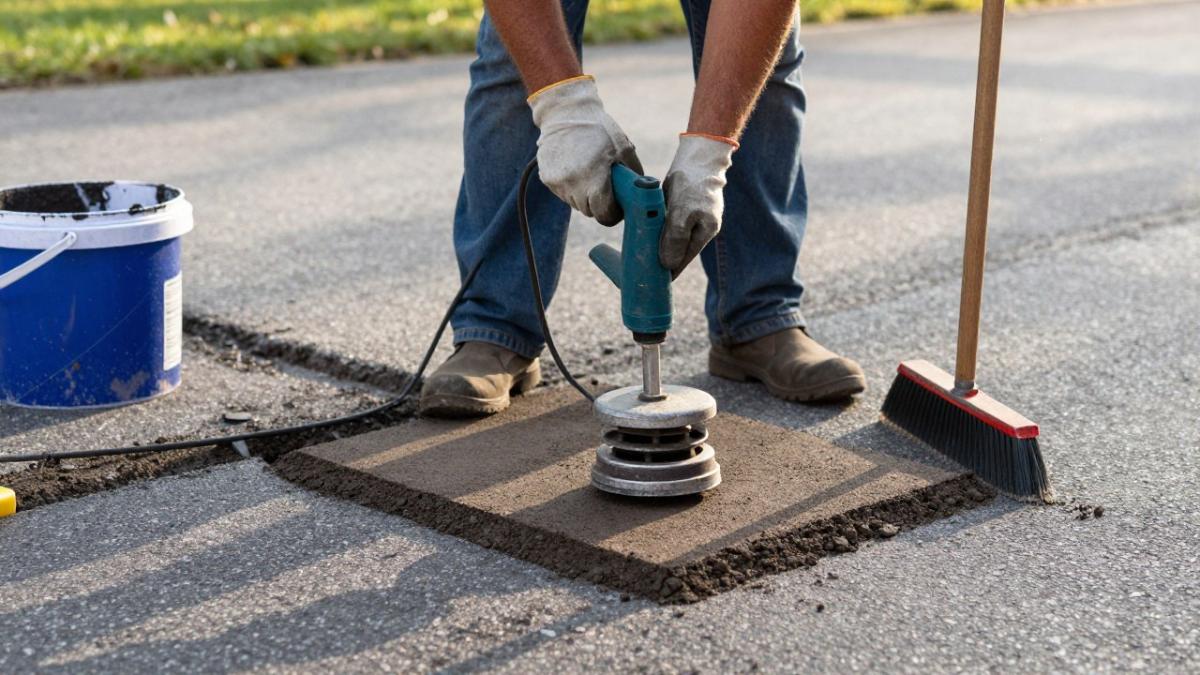
Step 4: Clean the area. Sweep out debris and dust so the patch bonds to a clean, dry surface.
Step 5: Fill and compact in lifts. Place patch material in layers, tamping each one. Overfill slightly, then compact flush.
Step 6: Seal the edges. A thin bead of crack sealer around the perimeter keeps water out.
Watch out: patching over a wet base traps moisture and guarantees the repair fails.
When to call a pro: if cracking covers a large area, the base is saturated, or the surface is pushing up or sinking. Then read cost factors behind a repair quote and how to compare and hire paving companies before you make calls.
That’s also where we come in. All-Tech Asphalt Paving, LLC. provides asphalt repairs, overlays, and total reconstruction, using specialized excavation machinery and an owned fleet of concrete mixer trucks. Our materials are chosen to meet or exceed state and federal standards, and application follows manufacturer specifications.
Fixing alligator cracks properly means fixing what’s underneath them, not just the surface you can see. If the damage runs deeper than a patch can solve, get a professional assessment before you spend on a repair that won’t last. Get started with All-Tech Asphalt Paving, LLC. and put a repair plan in place that holds up season after season.
Frequently Asked Questions
Can alligator cracking in asphalt be repaired, or does it always mean replacement?
Small, isolated areas of alligator cracks can be repaired by cutting out the failed section, removing the broken asphalt, and patching with hot-mix or cold-patch material. Widespread cracking across a large area usually points to base failure, and patching those spots is a temporary fix at best. If the pattern covers a significant portion of the surface or the base is soft, full-depth repair or replacement is the durable answer.
Can you pave over alligator cracks with an asphalt overlay?
An overlay only works when the base underneath is still sound. Paving over cracks without fixing the base traps the problem and the new layer cracks in the same pattern within a few seasons. For localized damage, cut out the failed asphalt and patch before overlaying. If the base has failed across the lot, the base needs reconstruction first, then a fresh surface.
What causes alligator cracks in asphalt?
Alligator cracks, also called fatigue cracking, usually start with a weak aggregate base, poor drainage, or years of heavy traffic load stress. The surface flexes over a failing base until interconnected cracks form. Oil contamination and thin pavement layers speed up the process. Treating the crack pattern without addressing the base failure underneath rarely lasts.
