
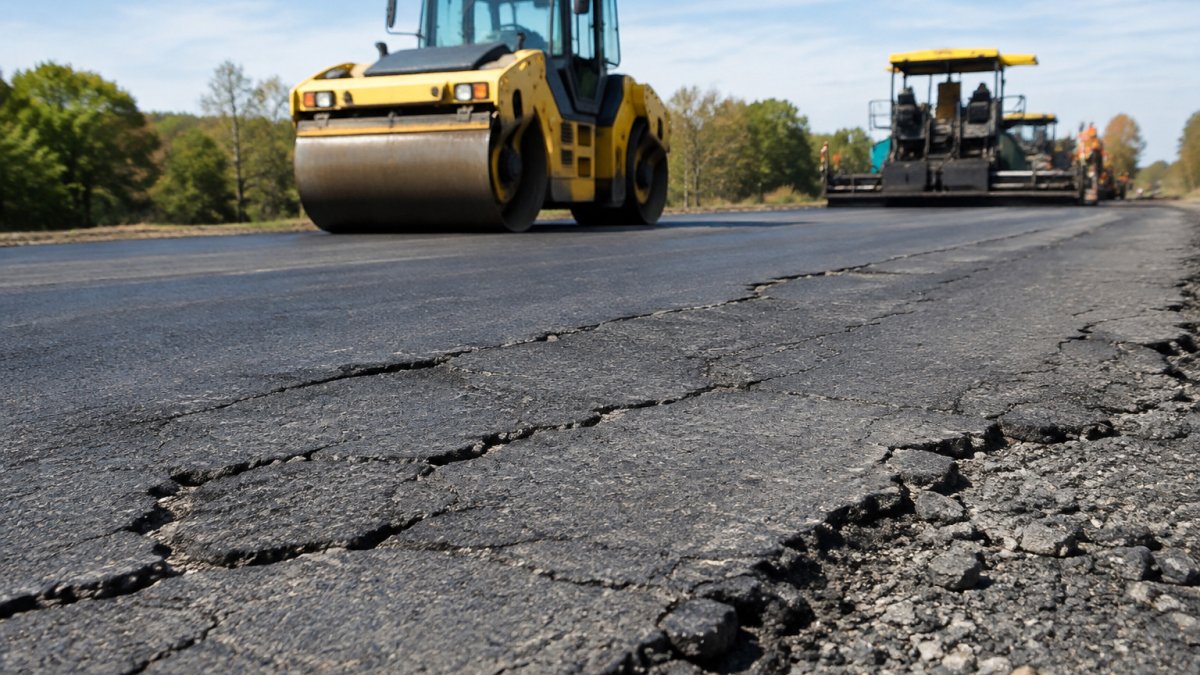
Why Asphalt Pavement Fails Prematurely and How to Stop It
Quick Summary
Asphalt pavement usually fails early because of problems beneath the surface, especially poor drainage, unstable soil, and a weak or poorly compacted base. Because each layer depends on the one below it, the surface cracks even when the asphalt itself is good quality.
- Houston’s clay-heavy soils swell when wet and shrink when dry, pushing and pulling on the pavement above.
- Water soaking into a wet base weakens the support under the surface and speeds up cracking and potholes.
- Asphalt and base layers must be compacted to the right density to keep water out and resist traffic deformation.
- A surface patch will not last if the base or subgrade has failed, so address the underlying layer first.
- Repair works when the base is sound and damage is limited; replacement is needed when failure is widespread or the base has settled.
Table of Contents
- How Asphalt Pavement Is Built and Where Failure Starts
- Common Causes of Premature Asphalt Pavement Failure
- Why Asphalt Repairs Fail Prematurely and How to Diagnose the Layer at Fault
- Asphalt Repair vs. Full Surface Replacement
- Frequently Asked Questions
How Asphalt Pavement Is Built and Where Failure Starts
Last Updated: November 8, 2026
Asphalt pavement fails prematurely more often than most property owners expect. A typical parking lot is designed to last 15 to 20 years, yet many lots in Houston show cracks and potholes within a few years of installation. Understanding why starts with how the pavement is built, because failure almost always begins below the surface you can see. Read Houston-specific guidance on preventing premature asphalt failure for local prevention steps.
A standard asphalt pavement has three main parts:
- Surface course: The top asphalt layer that takes traffic and weather
- Base course: A layer of crushed stone or aggregate that spreads the load
- Subgrade: The native soil underneath, which supports the whole structure
Each layer depends on the one below it. When the base or subgrade weakens, the surface above it cracks, even if the asphalt itself is good quality. That is why a lot can look fine on top and still be failing underneath.
Common Causes of Premature Asphalt Pavement Failure
Most premature failures come from a handful of causes. Knowing them helps you spot trouble early.
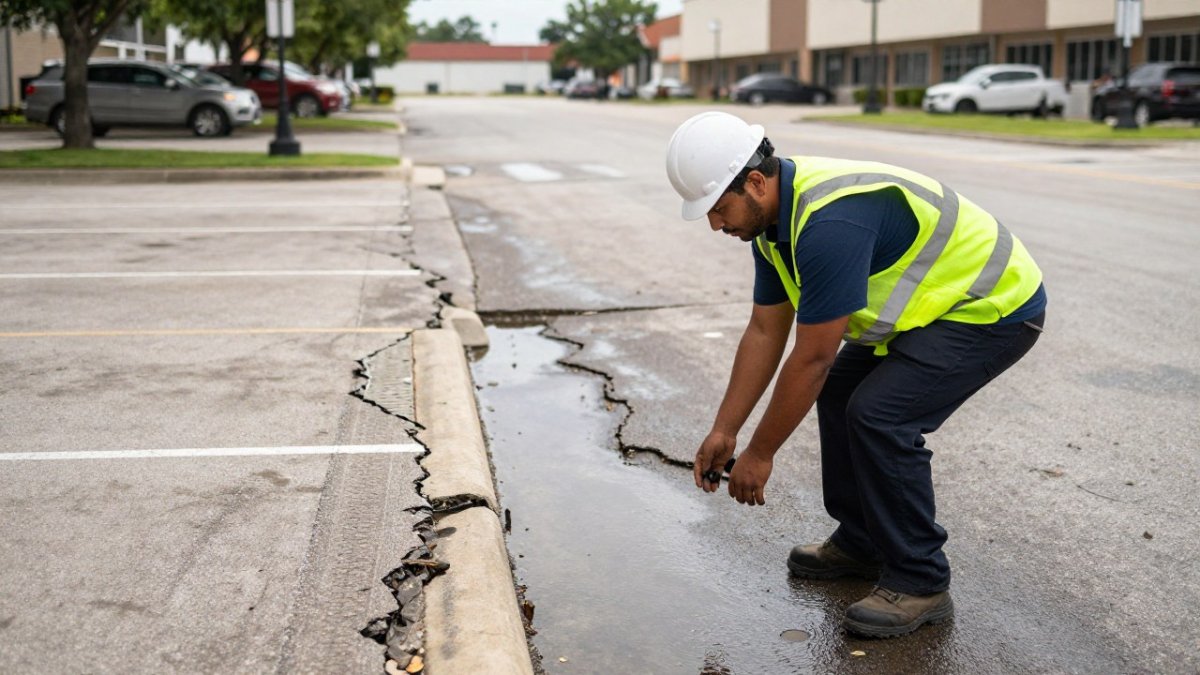
!Crew member in hard hat and safety vest inspecting a cracked asphalt parking lot edge beside a wet, pooled drainage area
Subgrade and soil instability. Houston’s clay-heavy soils swell when wet and shrink when dry. This movement pushes and pulls on the pavement above. Localized soil issues can cause cracks and dips in just one area of a lot.
Poor drainage and water infiltration. Water is the biggest enemy of asphalt. When it soaks into a wet base, it weakens the support under the surface. Pooled water also speeds up cracking and potholes.
Base-course failure. A base that was too thin, poorly graded, or not compacted properly will settle over time. Once the base moves, the asphalt above it breaks.
Insufficient or uneven compaction. Asphalt and base layers must be compacted to the right density. Low density leaves air gaps that let water in and allow the pavement to deform under traffic.
Asphalt mix and material quality. The mix must match the traffic load. A lot that carries heavy trucks needs a stronger mix than a light-duty driveway.
Poor construction practices. Weak surface preparation, improper joint construction, and skipped steps like tack coat all shorten pavement life.
Inadequate bonding between layers. When layers do not bond well, they can separate, a problem called delamination (Publication Details – Pavements). This often shows up as surface peeling or raveling.
Common warning signs include:
- Alligator cracking, which looks like connected cracks in a pattern
- Rutting in wheelpaths where traffic runs most
- Potholes that keep returning after a patch
- Reflective cracking that shows through a repair
The article points to several recurring causes, and the table below sets each one against its effect and its fix.
| Cause | Effect | Fix |
|---|---|---|
| Subgrade and soil instability | Cracks and dips in one area | Address soil movement |
| Poor drainage and water infiltration | Weakened base, cracking, potholes | Improve drainage |
| Base-course failure | Settling, broken asphalt above | Correct thickness and compaction |
| Insufficient or uneven compaction | Water entry, deformation under traffic | Compact to the right density |
| Asphalt mix and material quality | Failure under heavy loads | Match mix to traffic load |
| Poor construction practices | Shortened pavement life | Follow surface prep and tack coat steps |
| Inadequate bonding between layers | Peeling or raveling | Ensure layers bond properly |
Why Asphalt Repairs Fail Prematurely and How to Diagnose the Layer at Fault
A repair that fails within months usually did not fix the real problem. Patching the surface does nothing if the base is wet or the subgrade is soft.
To find the layer at fault, work through these steps:
- Check the surface. Cracks that are shallow and small often point to surface-course aging.
- Look at the edges and drainage. Water pooling near the edges points to drainage or base trouble.
- Inspect the depth of failure. Deep potholes or large dips usually mean the base or subgrade has failed.
- Note the pattern. Cracks in one spot suggest a localized soil problem. Cracks across the whole lot suggest a material or traffic issue.
If the failure is in the base or subgrade, a surface patch will not last. Address the underlying layer first.
Asphalt Repair vs. Full Surface Replacement
Repair is the right choice when the base is sound and the damage is limited to the surface. Learn when a lot has reached the point of reconstruction. Full surface replacement makes more sense when failure is widespread or reaches the base. See the cost factors that drive each quote.
Repair usually works when:
- Damage covers a small part of the lot
- The base is firm and dry under the damaged area
- Cracks are small and have not spread
Replacement is usually needed when:
- Failure covers most of the lot
- The base has settled or is wet
- Repairs keep failing in the same areas
Ask a qualified professional to test the base before you decide. A patch on a weak base just delays the bigger expense.
Stop premature failure by addressing drainage, base quality, and compaction when you build or repair. Contact All-Tech Asphalt Paving, LLC. through our website to get a quote.
Frequently Asked Questions
What is the most common cause of asphalt pavement failure?
The most common cause is a weak or wet base beneath the asphalt rather than the asphalt surface itself. When subgrade soil loses strength or water infiltrates the base course, the layers above flex under traffic loads, producing cracking and potholes. Poor drainage, inadequate compaction during construction, and heavy vehicle loading all accelerate this process. Diagnosing the base early, before surface damage spreads, usually costs far less than rebuilding the pavement structure later.
Why do asphalt repairs fail prematurely?
Patches often fail because the damaged area was not cut back to sound material, the edges were not sealed, or the new asphalt did not bond to the existing layer. Skipping a tack coat or repairing over a wet or contaminated base also causes early failure. Water that gets under a patch will push it up or wash out the base, so a repair that looks fine after one season can loosen within a year or two when the underlying problem was never addressed.
How can you tell whether asphalt needs repair or full replacement?
Localized potholes or cracks in an otherwise solid surface usually call for repair. Widespread alligator cracking, rutting, or repeated patch failure point to base or subgrade problems that a surface fix will not solve, which generally means replacement. Check whether the damage stays in the surface layer or reaches the base by looking at how deep potholes go and whether the pavement flexes underfoot. A pavement engineer or experienced paving contractor can run a core sample to confirm which layer has failed before you commit to a method.
