
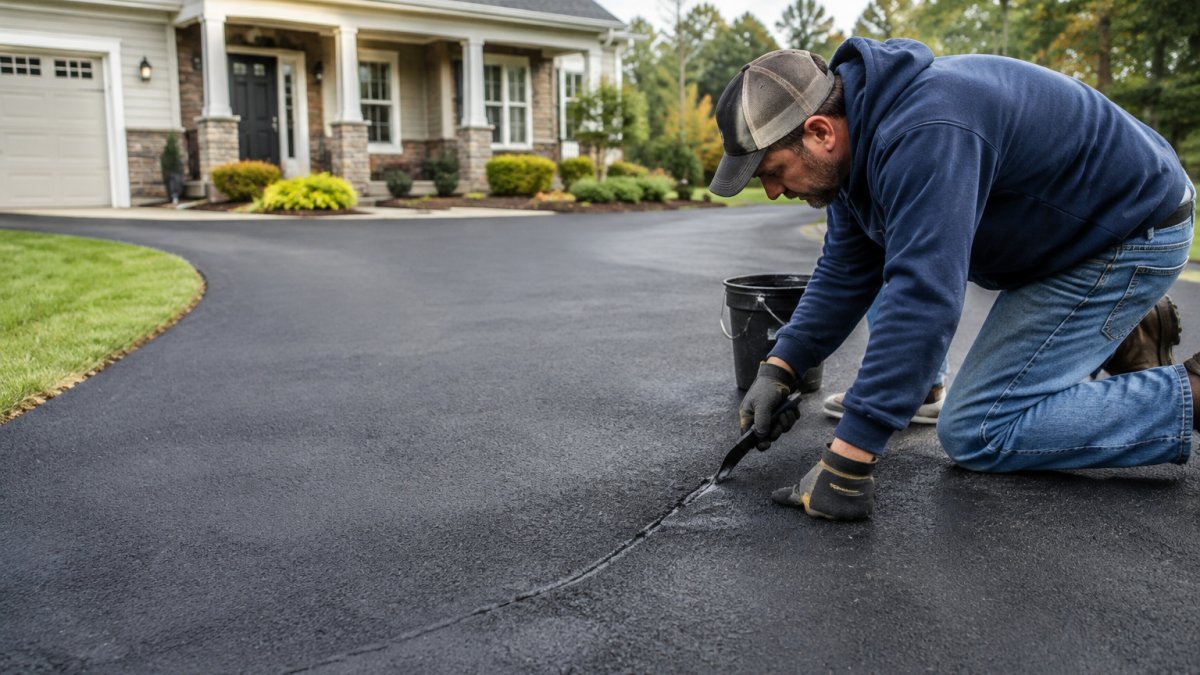
7 Ways to Prevent Asphalt Driveway Cracking
Last Updated: November 5, 2026
Quick Summary
Prevent asphalt driveway cracking by building a well-compacted base with proper drainage, inspecting the surface at least twice a year, and filling hairline cracks before water gets in. Keep water off the surface by fixing low spots and grading runoff away from the pavement, and seal or repair cracks in warm, dry conditions.
- Walk the driveway at least twice a year, in early spring and late fall.
- Fill hairline cracks under 1/8 inch with a rubberized asphalt-emulsion filler.
- Fill cracks when pavement is dry and air temperatures are above 50°F and rising.
- Fix drainage first: a low spot that holds water will crack first.
- Call a professional for alligator cracking, which usually signals a failing base layer.
Table of Contents
- Why Asphalt Driveways Crack: Causes and Warning Signs
- Build It Right: Installation Choices That Prevent Cracking
- Asphalt Driveway Maintenance That Stops Cracks Early
- Drainage and Water Control: Keeping Water Off the Surface
- How to Fix Hairline Cracks in Asphalt Driveway Before They Spread
- How to Repair Large Cracks in Asphalt Driveway: Step by Step
- Frequently Asked Questions
Why Asphalt Driveways Crack: Causes and Warning Signs
Cracking starts long before you see a line in the pavement. Water, sun, and traffic loads work on an asphalt driveway from the day it is poured, and the first cracks are usually a symptom, not the root problem.
Asphalt driveway cracking is the splitting of the paved surface caused by movement, moisture, or aging in the layers beneath and within the asphalt itself. Four forces do most of the damage:
- Water intrusion through unsealed pores and open cracks
- Sun exposure and oxidation that dry out the binder
- Temperature changes that expand and contract the surface
Watch out: a minor-looking crack can hide a soft, saturated base layer, and filling it without fixing the base means it returns within a season.
Crack Types and How Urgent Each One Is
Not every crack needs the same response. Diagnosing the type tells you whether you can handle it yourself or need professional repair.
| Crack Type | What It Looks Like | Urgency | Typical Fix |
|---|---|---|---|
| Hairline | Thin lines under 1/8 inch wide | Low, act soon | Crack filler |
| Edge crack | Splits along the driveway border | Medium | Fill and improve edge support |
| Alligator cracking | Web of connected cracks | High | Investigate base, likely pro repair |
| Wide crack | Gap over 1/2 inch | High | Clean, fill, possibly patch |
| Pothole | Crumbled hole through the surface | Urgent | Patch or full repair |
Alligator cracking is the one to take seriously. It usually signals a failing base layer, not just a surface problem, and filling those cracks without addressing the base wastes money.
Build It Right: Installation Choices That Prevent Cracking
The single best crack prevention step happens before a single ton of asphalt is laid. A well-compacted soil base and a properly thick base layer keep the surface from flexing under weight and moisture.
Prevention starts at installation:
- Excavate to the right depth and grade for drainage
- Compact the soil in lifts, not all at once
- Build a base layer thick enough for the expected vehicle loads
Homeowners planning a new driveway can read more on how to install an asphalt driveway to get the base and build right from day one.
Asphalt Driveway Maintenance That Stops Cracks Early
Routine asphalt driveway maintenance is cheaper than any repair. A short inspection twice a year catches small cracks, standing water, and surface wear before they turn expensive. Catching small issues on a schedule is a key factor in how long a driveway lasts.
A Practical Inspection Cadence
Walk the driveway at least twice a year, timed to the seasons when damage appears or worsens:
- Early spring: after the last freeze-thaw cycle, look for new cracks, heaving, and soft spots. Winter is when water intrusion does the most damage, and spring is when you see the results.
- Late fall: before the first freeze, clear cracks and edges so water cannot get in and expand. This is also the best window for sealcoating in most climates.
- After any heavy rain: check for standing water and runoff paths. A low spot that holds water after every storm will crack first.
A full walk-through takes 10 to 15 minutes. Bring a screwdriver to probe soft spots and a phone to photograph cracks so you can track whether they are growing.
Decision Thresholds: DIY vs. Professional
Not every crack is a DIY job. Use these thresholds to decide:
| Condition | DIY-appropriate | Call a professional |
|---|---|---|
| Hairline cracks under 1/8 inch | Yes, clean and fill | , |
| Cracks 1/8 to 1/2 inch, isolated | Yes, clean, fill, seal | If they return within a season |
| Cracks over 1/2 inch | Patch only if base is sound | Yes, base may be failing |
| Alligator cracking (web pattern) | No | Yes, indicates base failure |
| Potholes or crumbling edges | Small patches only | Yes, structural repair |
| Standing water in one spot | Minor regrading | Yes, drainage correction |
| Multiple cracks returning in the same area | No | Yes, investigate the base |
A common pattern: a homeowner fills the same crack every spring for three years. That is a sign the base underneath is moving, and no amount of filler will fix it. Once a crack returns in the same location twice, get an evaluation.
Seasonal Timing for Sealing and Repair
Timing matters as much as the task. Crack filler and sealcoat need warm, dry conditions to bond and cure:
-
Crack filling: best when pavement is dry and air temperatures are above 50°F and rising. Avoid filling in direct sun on a very hot day if the filler is a hot-pour type, and avoid filling when rain is expected within 24 hours.
-
Large repairs and patching: similar temperature rules, but base repair should be done when the subgrade is dry, not after a wet season.
Watch out: applying filler or sealcoat to a damp surface, or just before rain, is one of the most common reasons a repair fails within a year. Check the forecast and give the product its full cure window before driving on it.
Sealcoating adds a protective layer that can slow oxidation and help limit water intrusion. For a deeper look at stopping premature failure, see how to prevent premature asphalt failure.
Drainage and Water Control: Keeping Water Off the Surface
Water is the number one enemy of asphalt. Standing water softens the base, and runoff that crosses the surface wears it down and finds every weak point.
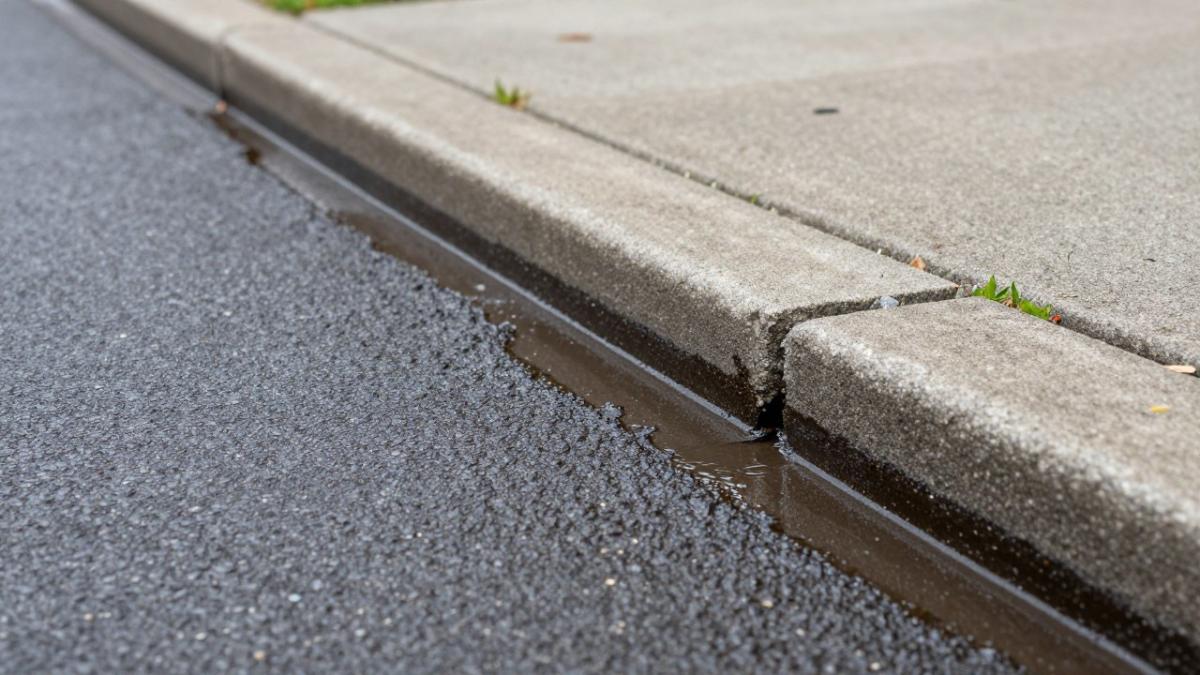
Fix drainage before you fix cracks. Three checks matter most:
- Slope: the surface should shed water, not hold it
- Edges: soil should sit level with or just below the pavement, not above it
- Runoff path: water should flow to a drain, ditch, or grade, not pool at the garage door
If water sits in one spot after every rain, that low point will crack first. Correcting the grade or adding a drainage channel solves the cause.
How to Fix Hairline Cracks in Asphalt Driveway Before They Spread
Hairline cracks are the easiest to fix and the most important to catch. Small cracks let water in, and freeze-thaw cycles widen them fast.
A rubberized asphalt-emulsion filler is one common option for hairline cracks, as it is designed to flex with the pavement.
Steps to fix hairline cracks:
- Clean the crack with a wire brush and compressed air
- Remove debris and loose material
- Apply the rubberized filler with a squeeze bottle or caulk gun
- Smooth and level the filler with a putty knife
- Let it cure per the product label before driving on it
Do this while the crack is still thin. Once it widens past 1/2 inch, you are into a bigger repair.
How to Repair Large Cracks in Asphalt Driveway: Step by Step
Large cracks and potholes need more than filler. The goal is to clean out the failure, rebuild the base if needed, and seal it so water stays out. The method depends on crack width, base condition, and product, getting those three right separates a repair that lasts from one that reopens next season.
Choosing the Right Repair Product
There is no single best product for every large crack. Match the product to the crack and the conditions:
| Product type | Best for | Typical crack width | Application conditions | Curing expectations |
|---|---|---|---|---|
| Rubberized asphalt-emulsion filler | Hairline to medium cracks | Up to about 1/2 inch | Dry surface, 50°F and rising, no rain 24 hours | Skin over in hours; full cure per label, often 24 hours |
| Hot-pour rubberized crack sealant | Medium to wide cracks, larger jobs | 1/4 to 1 inch | Requires heating equipment; dry surface, warm weather | Sets quickly as it cools; drivable within an hour or two |
| Cold-patch asphalt | Potholes and wide, crumbling cracks | Over 1/2 inch, irregular | Dry or damp surface depending on product; 50°F and rising | Tamp and drive on immediately; cures over weeks |
| Asphalt patch (bagged or bulk) | Larger patches, base repair | Wide areas, not just cracks | Dry base, warm weather | Compact in layers; cure per product |
For a crack over 1/2 inch, filler alone is usually not enough. The crack needs a patch or a base repair, because a wide gap means the pavement has moved and filler will just crack again.
Step-by-Step Large Crack Repair
- Clean the crack with a wire brush, broom, and compressed air to remove debris, loose asphalt, and vegetation. A shop vacuum helps pull out fine material.
- Square the edges if the crack is crumbling, using a chisel or saw. Straight, sound edges give the patch something to bond to.
- Check the base for soft spots by probing with a screwdriver. If the base is wet or soft, dig out the failed material and add compacted crushed stone or base material before patching.
- Fill the crack in layers with asphalt patch or rubberized filler. For deep cracks, fill in 1- to 2-inch lifts and tamp each layer rather than dumping it all at once.
- Smooth and level with a tamper or plate compactor. Overfill slightly and compact so the patch sits level with or just above the surrounding pavement.
- Seal the surface after the curing time listed on the product label to protect the repair and blend it with the surrounding asphalt.
Watch out: filling a deep crack in one pass leaves a soft, uncompacted center that fails under tire load. Layer and tamp each lift, and do not skip the base check, a patch over a soft base will sink within a season.
When to Stop DIY and Call a Professional
Some large cracks are beyond a homeowner repair. Call a professional when:
- The crack is part of an alligator pattern or a web of connected cracks
- The base is soft over an area larger than a small patch
- Cracks return in the same spot after two repairs
In those cases, the options are usually full-depth patching, resurfacing, or in severe cases replacement. A qualified paving contractor can tell you which is appropriate after inspecting the base.
When repairs get beyond a DIY fix, the next step is choosing a qualified paving company. Our guide on how to choose a paving company covers what to ask and what to verify. For major crack repairs you would rather hand off, contact our team to schedule an assessment.
Frequently Asked Questions
Is it normal for an asphalt driveway to crack?
Hairline cracks are a normal part of an asphalt driveway’s life, especially after the first few winters. Temperature changes, sun exposure, and oxidation gradually make the surface brittle. What is not normal is cracking within the first two years, or cracks wider than a quarter inch. Those usually point to a weak base layer, poor compaction during installation, or water draining toward the driveway instead of away from it. Catch small cracks early and seal them before water gets underneath.
How can I keep water from damaging my asphalt driveway?
Water is the main driver of asphalt driveway cracking, so control it first. Clear leaves and debris from gutters and downspouts so runoff lands on soil, not pavement. Check that the driveway slopes away from your garage or foundation. Fill low spots and standing water areas before they work into the base layer. If water runs off a hill or slope onto the driveway, add a shallow swale or channel to redirect it. Repair any crack as soon as you see it so water cannot seep in.
When should I seal an asphalt driveway?
Most asphalt driveways benefit from sealcoating every two to three years, but timing matters more than frequency. New asphalt needs to cure for at least six to twelve months before the first seal. After that, seal when the surface looks dull, gray, or chalky, or when small cracks start appearing. Sealing too often traps moisture and causes surface deterioration. If you are unsure, a professional inspection can tell you whether the surface protection is due or still holding.
Can small asphalt driveway cracks be repaired before they spread?
Yes, and early repair is the cheapest maintenance you can do. Hairline cracks under an eighth inch wide can be cleaned and filled with a pourable crack filler, then sealed. Cracks a quarter inch to half an inch wide need a rubberized asphalt-emulsion filler applied after removing debris and loose material. Once cracks reach an inch or more, or you see alligator cracking, the base layer may be failing and a patch or overlay is the better fix. Repair early and water stays out.
Crack prevention comes down to three things: a solid base, water control, and catching small cracks early. All-Tech Asphalt Paving, LLC. builds and repairs asphalt with materials that meet or exceed state and federal standards, using specialized excavation machinery and an owned fleet of concrete mixer trucks to keep projects on schedule. Get started with All-Tech Asphalt Paving, LLC. and protect your driveway before the next crack spreads.
