
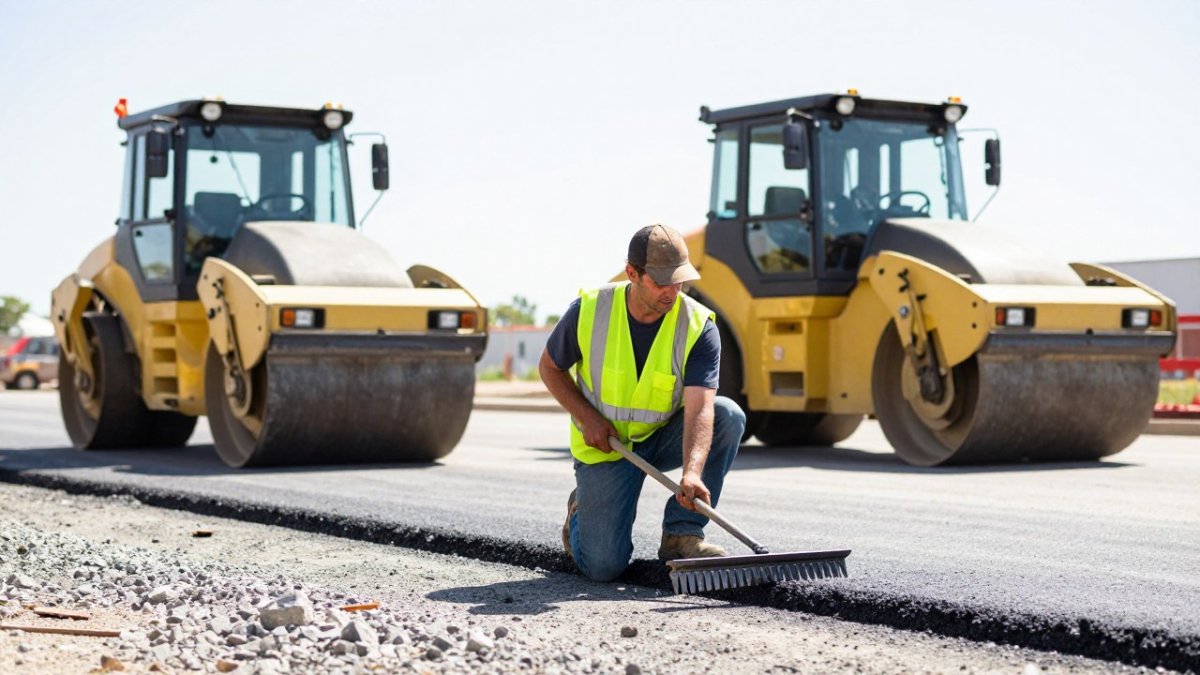
7 Things That Decide How Much Paving a Parking Lot Costs
Last Updated: November 21, 2026
Quick Summary
Parking lot paving cost is not a single rate; it is the sum of site conditions, material volumes, and the work required to make a lot drain and hold up. Two jobs with identical square footage can land far apart on price, because a flat, well-drained lot with solid subgrade needs far less work than a site with soft soil, poor drainage, and failing base.
- Subgrade is the native soil beneath the pavement and decides how much base material the lot needs.
- A complete per-square-foot figure should include excavation, aggregate base, asphalt, labor, equipment, and mobilization.
- Asphalt generally carries the lower initial installation cost, while concrete typically carries a longer service life.
- Resurfacing costs less than new construction because the base and drainage already exist.
- A bid that omits mobilization, striping, or permit fees is incomplete, not cheaper.
Table of Contents
- What Drives Parking Lot Paving Cost: The Variables That Move the Number
- Asphalt Parking Lot Cost per Square Foot: What the Number Includes
- Asphalt vs. Concrete Parking Lot Cost: A Material Comparison
- Parking Lot Resurfacing Cost per Square Foot vs. New Construction
- Permits, Accessibility, and Stormwater Requirements That Add to the Bill
- How to Measure Your Lot and Use a Parking Lot Paving Cost Calculator
- How to Evaluate Bids and Choose a Paving Contractor
- Request a Quote for Your Parking Lot Paving Project
- Frequently Asked Questions
What Drives Parking Lot Paving Cost: The Variables That Move the Number
Ask ten contractors how much does it cost to pave a parking lot and you’ll get ten different numbers, because parking lot paving cost is not a single rate. It is the sum of site conditions, material volumes, and the work required to make a lot drain and hold up. Pricing is typically built from the ground up, and the ground is usually where the surprises hide.
Two jobs with identical square footage can land far apart on price. A flat, well-drained lot with solid subgrade needs far less work than a site with soft soil, poor drainage, and failing base. That difference shows up in excavation hours, aggregate tonnage, and haul-off costs long before a single ton of asphalt is laid.
Below, we break down the seven variables that actually move the number, so you can read a bid with confidence and spot the line items that deserve scrutiny.
Site Conditions and Subgrade Preparation
Subgrade is the native soil beneath the pavement structure, and it decides how much base material the lot needs. Soft, wet, or clay-heavy soil requires excavation and replacement with compacted aggregate, and that work is labor, equipment, and trucking.
Materials, Depth, and Drainage Requirements
Pavement depth and mix design drive material cost directly. Commercial lots typically need a thicker asphalt section than a residential driveway because they carry heavier loads and more traffic. Aggregate base thickness, binder course, and surface course each add tonnage.
Drainage is the other half of this equation. Grading to move water off the lot, installing catch basins, and tying into storm systems all carry cost, and skipping them shortens pavement life.
Asphalt Parking Lot Cost per Square Foot: What the Number Includes
Asphalt parking lot cost per square foot is a bundled figure covering site preparation, aggregate base, asphalt materials, labor, equipment, and mobilization. It is not just the blacktop. When a quote looks unusually low, something in that bundle is usually missing.
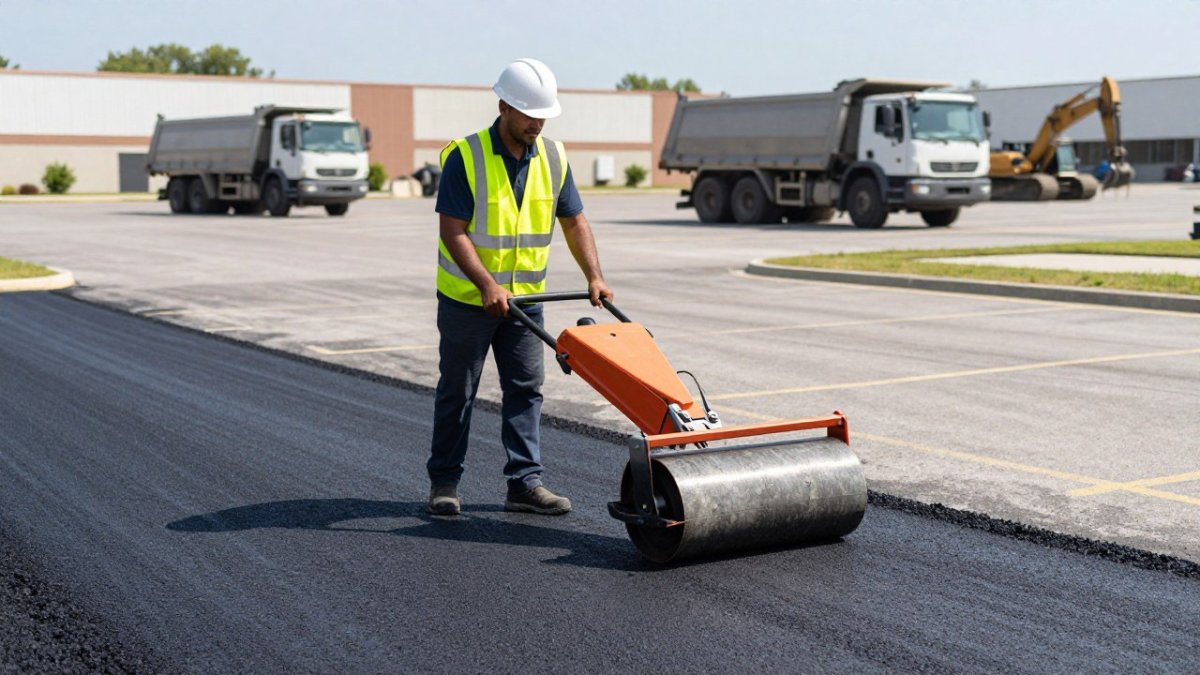
A complete per-square-foot figure should account for:
- Excavation and grading of the existing surface
- Hauling and compacting aggregate base
- Asphalt binder and surface courses at specified depths
- Curb work, striping, and pavement markings
- Mobilization of equipment and crew to the site
Two bids at the same per-square-foot rate can include very different scopes. Ask each contractor to itemize.
Asphalt vs. Concrete Parking Lot Cost: A Material Comparison
Asphalt vs. concrete parking lot cost is the comparison most property managers ask about first, and the honest answer is that the upfront number and the lifetime number point in different directions. Asphalt generally carries the lower initial installation cost, while concrete typically carries a longer service life. The right choice depends on traffic loads, budget timing, and how long you plan to own the asset.
| Factor | Asphalt | Concrete |
|---|---|---|
| Upfront installation cost | Lower | Higher |
| Typical service life | Shorter, with maintenance | Longer |
| Routine maintenance | Sealcoating, crack repair | Joint sealing, occasional panel repair |
| Cure time before use | Fast | Longer |
| Best for | Tight budgets, fast turnaround | Heavy loads, long ownership |
What the Per-Square-Foot Numbers Actually Reflect
A per-square-foot price is only meaningful when you know the pavement section behind it. Asphalt parking lots are built in layers: an aggregate base, a binder course, and a surface course, each placed at a specified compacted thickness.
That is why two asphalt quotes at the same per-square-foot rate can differ by thousands of dollars: one may include a six-inch base and a two-inch surface, the other a four-inch base and an inch and a half of surface. Ask for the section in writing, base thickness, binder thickness, surface thickness, and mix designation, before you compare totals.
The Lifecycle Math Most Bids Leave Out
The upfront comparison is only half the decision. Over a full service life, asphalt typically requires sealcoating every few years, crack sealing as the surface ages, and a mill-and-overlay resurfacing at some point before full replacement.
Watch out: a lifecycle comparison built on a contractor’s optimistic service-life assumption is not a comparison at all. Ask each bidder to state the assumed service life and the maintenance schedule behind it.
When Asphalt Wins on Price
Asphalt is often considered when the budget is fixed and the lot needs to open quickly. It generally cures faster than concrete and can be resurfaced later, which allows spending to be phased over time.
When Concrete Justifies the Higher Upfront Cost
Concrete is often chosen for heavy-duty industrial sites, loading zones, and properties held long term, where a longer service life may offset the higher installation cost over the life of the pavement.
A Note on Hybrid Approaches
Not every lot has to be all one material. Some lots combine materials, using asphalt for drive aisles and general parking and concrete in heavy-load areas such as loading zones and dumpster pads. Ask your contractor whether a hybrid section makes sense for your traffic pattern before you commit to a single material.
Parking Lot Resurfacing Cost per Square Foot vs. New Construction
Parking lot resurfacing cost per square foot is typically lower than new construction because the base and drainage already exist. Resurfacing, also called repaving or an overlay, mills or cleans the old surface and lays new asphalt over a sound base. New construction costs more because it includes full excavation, new aggregate base, grading, and drainage. The gap between the two is real, but it is not automatic, it depends entirely on what is underneath the surface you are paving over.
What Each Scope Actually Includes
The clearest way to compare the two is line by line. A resurfacing scope generally includes milling or cleaning the existing surface, tack coat, and a new asphalt overlay, plus restriping and any localized patching where the old surface has failed.
That difference in scope is where the price gap comes from. The overlay skips excavation, base, and most drainage work; the new build pays for all of it.
When an Overlay Is the Right Call
An overlay works when the existing asphalt is sound but worn, surface raveling, minor cracking, and oxidation are typical candidates. The base must be intact and well drained, and the existing pavement must be able to carry the new layer without deflecting.
The catch: resurfacing only works if the base is intact. If the subgrade has failed, an overlay just transfers the problem upward. A contractor who recommends resurfacing without checking base condition is selling you a short-term fix.
When Reconstruction Is the Better Investment
Reconstruction is the better call when the base has failed, when drainage is inadequate, or when the lot needs a different pavement section to handle heavier traffic than it was originally built for.
A practical test is to ask what percentage of the existing surface shows structural distress. If the failures are isolated, patching plus an overlay can be cost-effective. If they are widespread, the overlay is a temporary patch on a permanent problem.
How to Compare a Resurfacing Bid to a New-Build Bid
Because the scopes differ so much, comparing the two bids on total price alone is misleading. Ask each bidder to break out excavation, base, paving, drainage, striping, and mobilization as separate line items, then compare the line items that overlap. The resurfacing bid should show patching quantities and the areas being milled; the new-build bid should show base thickness and drainage quantities.
Watch out: a resurfacing bid that does not state how much patching is included is an open-ended change order. Get the patch allowance in writing, with a unit price for anything beyond it.
If you’re weighing the two, our guide on what to expect during parking lot reconstruction walks through the phases and disruption, and the repair-specific variables behind a quote are covered in our breakdown of commercial parking lot repair cost factors.
Permits, Accessibility, and Stormwater Requirements That Add to the Bill
Permits, accessibility standards, and stormwater rules add line items that many estimates overlook. Local permitting fees, accessibility requirements for parking stalls and access aisles, and stormwater management for runoff all carry real cost.
Stormwater management is the one that surprises property managers most. Regulations on how runoff leaves a site can require detention, infiltration, or treatment features, and those are engineered and permitted work.
Build permit and compliance costs into the project estimate early. They are not optional, and they are not small.
How to Measure Your Lot and Use a Parking Lot Paving Cost Calculator
A parking lot paving cost calculator is only as good as the measurements you feed it. Start by measuring the actual paved area, not the property line. Break the lot into simple rectangles, multiply length by width for each, and add them together for total square footage.
Next, count the parking spaces. Cost per parking space is a useful cross-check because stalls, aisles, and striping carry fairly consistent per-stall costs within a region. A quick estimate framework:
- Measure total paved square footage
- Count marked stalls and note access aisles
- Note current surface condition and visible cracking or settling
- List drainage features already present
Use those numbers to sanity-check any quote you receive. If a bid’s square footage doesn’t match your measurement, ask why before signing. For the repair-specific variables behind a quote, see our breakdown of commercial parking lot repair cost factors.
How to Evaluate Bids and Choose a Paving Contractor
Comparing bids is where most projects are won or lost. The lowest number is rarely the best value, and the highest is not automatically the safest. Compare scope, not just totals.
Ask every contractor the same questions:
- What pavement depth and base thickness are included?
- Is mobilization, haul-off, and striping in the price?
- Who handles permits, and are fees included?
- What is the schedule, and how are weather delays communicated?
- Can you provide references from similar-sized projects?
A contractor who answers these in writing is worth more than one who quotes fast and vague. Our guide to choosing a paving company covers the vetting process in detail, and small-business owners can use our contractor hiring guide for small businesses for a tailored checklist.
Watch out: a bid that omits mobilization, striping, or permit fees is not cheaper, it is incomplete. The change order arrives later.
Request a Quote for Your Parking Lot Paving Project
The only reliable way to price your lot is a site-specific estimate. Square-foot ranges help you budget, but they cannot see your subgrade, your drainage, or your access constraints.
At All-Tech Asphalt Paving, LLC., we use specialized excavation machinery and an owned fleet of concrete mixer trucks.
Get started with All-Tech Asphalt Paving, LLC. and turn a rough range into a real number. If you want to see how the process works first, read the steps to book a commercial paving consultation.
Paving a parking lot comes down to seven variables, and the only one you control is who you hire. Get a site-specific estimate from a contractor who itemizes the scope and stands behind the materials. All-Tech Asphalt Paving, LLC. offers itemized commercial estimates, in-house excavation and concrete equipment, and materials that meet state and federal standards. Get started with All-Tech Asphalt Paving, LLC. and price your project with confidence.
Frequently Asked Questions
What factors affect the cost of paving a parking lot?
The biggest drivers are lot size and number of parking spaces, pavement material (asphalt or concrete), and how much site preparation is needed. Subgrade condition, excavation, grading, compaction, aggregate base depth, drainage and stormwater management, curbs, striping, and pavement markings all add to the project estimate. Labor, materials, equipment, mobilization, and regional pricing also move the number. A lot that needs full reconstruction costs far more than one that only needs an overlay, so get an itemized bid rather than a single lump sum.
Is it cheaper to pave a parking lot with asphalt or concrete?
Asphalt usually costs less upfront per square foot than concrete, which is why it is common for large commercial lots. Concrete costs more to install but typically lasts longer and needs less routine maintenance, so the lifecycle cost comparison can favor either material depending on traffic, climate, and how long you plan to own the property. Ask each bidder to show pavement depth, aggregate base thickness, and maintenance assumptions so you compare like for like.
How much does parking lot resurfacing cost per square foot compared with new construction?
Resurfacing, also called repaving or an overlay, generally costs less per square foot than new construction because it reuses the existing base and skips most excavation and grading. The price depends on how much crack repair and patching the old surface needs, the overlay thickness, and whether drainage or curbs must be adjusted. If the subgrade or base is failing, an overlay will not fix it and full reconstruction becomes the better long-term choice.
How can I estimate the cost of a parking lot paving project?
Start by measuring the square footage of the paved area and counting the parking stalls, since per-stall cost is a common budgeting shortcut. Note the current surface condition, drainage issues, and whether you need new curbs or striping. A parking lot paving cost calculator gives a rough range, but only a site visit confirms subgrade condition and pavement depth. Use the estimate to set a budget, then compare at least two or three itemized bids from licensed contractors.
