
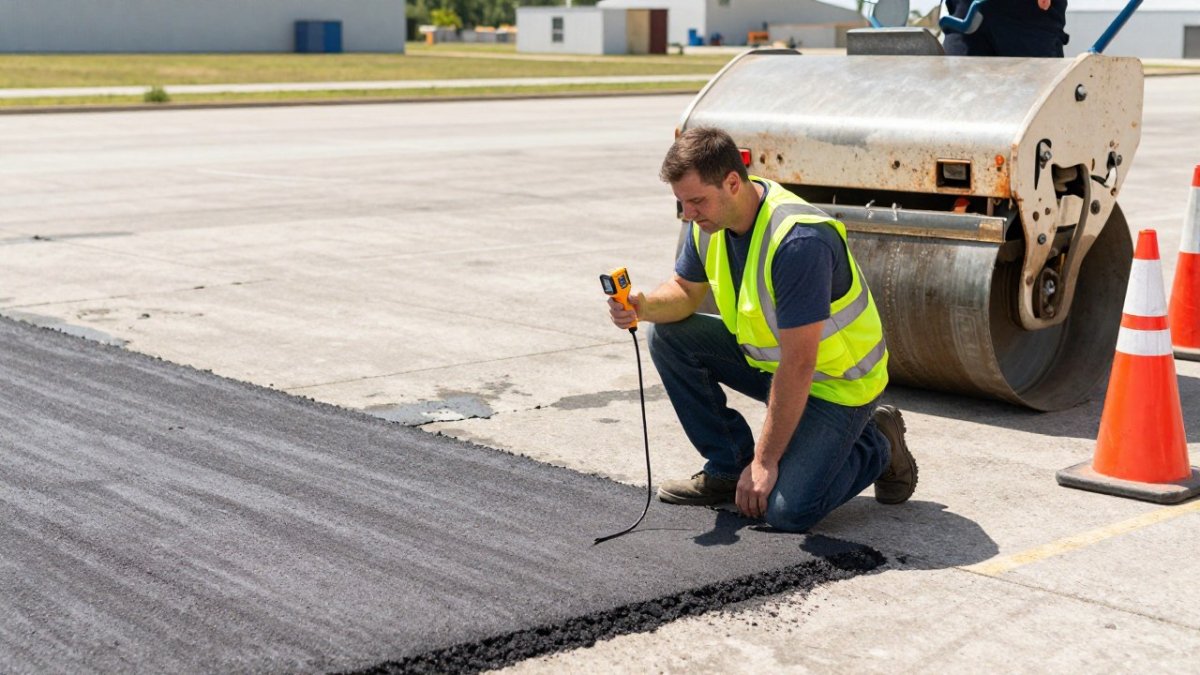
How to Hire Industrial Asphalt Paving Services
Last Updated: November 11, 2026
Quick Summary
Hiring industrial asphalt paving services means checking that every bid breaks costs into four categories: mobilization and traffic control, base and subgrade work, materials and thickness, and finishing and cleanup. Ask each bidder to show the proposed pavement section in inches and why, so thin pavement and weak base prep cannot hide in a lump sum.
- A low bid often hides thin pavement sections, weak base prep, or skipped drainage work.
- Pricing depends on square footage, subgrade condition, drainage needs, and schedule.
- Verify licensing and insurance against state records and through your own insurer before signing.
- Confirm the contractor owns crews and equipment or names what gets subcontracted.
- Industrial pavement needs a heavy-duty mix, adequate thickness, and working drainage for loaded trucks.
Table of Contents
- What Industrial Asphalt Paving Cost Actually Covers
- Asphalt Paving Materials for Heavy Traffic and Industrial Loads
- Your Asphalt Paving Contractor Checklist Before You Sign
- Frequently Asked Questions
What Industrial Asphalt Paving Cost Actually Covers
Hiring industrial asphalt paving services starts with knowing what you pay for. A low bid often hides thin pavement sections, weak base prep, or skipped drainage work.
Industrial asphalt paving cost breaks into four buckets:
- Mobilization and traffic control – equipment in, lane phasing
- Base and subgrade work – excavation, grading, compaction, stone base
- Materials and thickness – mix design and inches going down
- Finishing and cleanup – striping, ADA compliance, sweeping, haul-off
Pricing depends on square footage, subgrade condition, drainage needs, and schedule. Contact All-Tech Asphalt Paving for a quote based on your project. Ask every bidder to break costs out by these categories; a lump-sum estimate tells you nothing about pavement thickness or base depth.
Every industrial paving bid should break down into these four cost categories.
| Cost category | What it covers |
|---|---|
| Mobilization and traffic control | Equipment in, lane phasing |
| Base and subgrade work | Excavation, grading, compaction, stone base |
| Materials and thickness | Mix design and inches going down |
| Finishing and cleanup | Striping, ADA compliance, sweeping, haul-off |
Asphalt Paving Materials for Heavy Traffic and Industrial Loads
Asphalt paving materials for heavy traffic need a stronger mix and thicker section than a standard office lot. Industrial sites carry loaded trucks, forklifts, and trailers, so the pavement design must match those loads.
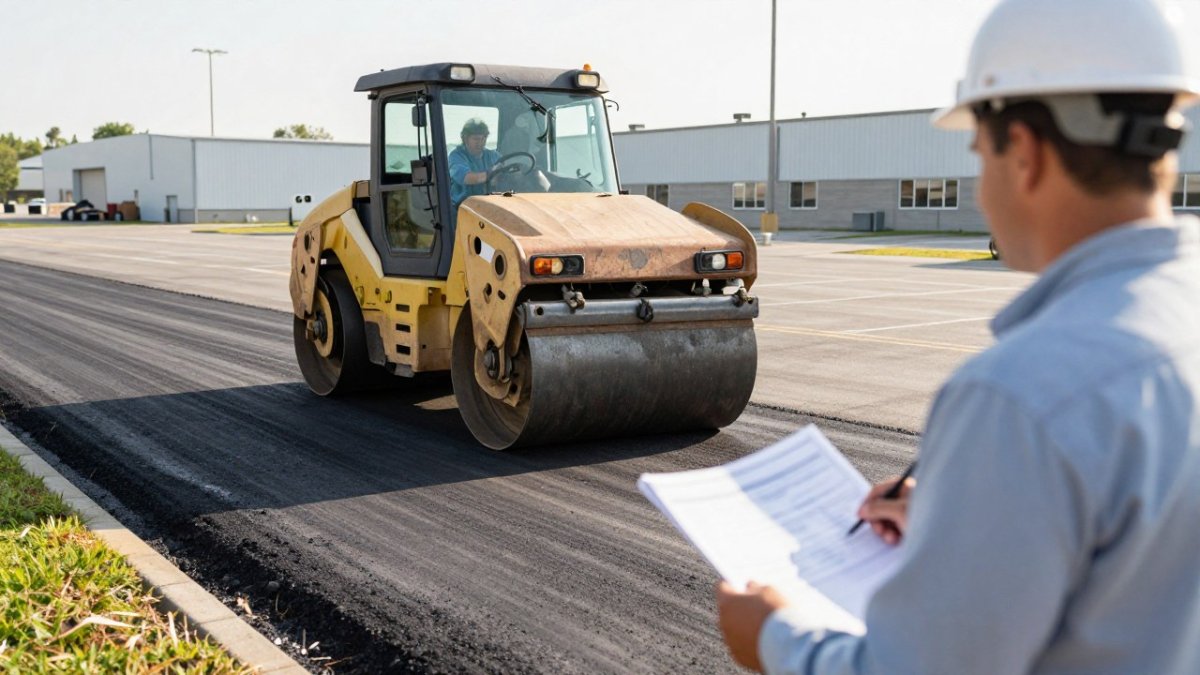
A durable industrial pavement depends on:
- Properly compacted subgrade and stone base
- Heavy-duty asphalt mix for slow, loaded traffic
- Adequate pavement thickness for expected axle loads
- Working drainage so water never sits on the surface
Comparing mix options? Our guide to the best asphalt paving materials for durability breaks down which mixes hold up under heavy loads, and you can learn how to verify asphalt material quality before it goes down.
Industrial facility managers should confirm their site can handle truck traffic. Our article on whether your industrial site can handle heavy truck traffic covers that check directly.
Your Asphalt Paving Contractor Checklist Before You Sign
A good asphalt paving contractor checklist protects you from the three things that sink industrial projects: delays, thin pavement, and unclear scope.
- Licensing and insurance current and verifiable
- Written estimate with thickness, base depth, and materials listed
- Owns crews and equipment, or names what gets subcontracted
- Project schedule with weather contingency in writing
- References from similar industrial or commercial jobs
- Warranty terms spelled out
- Traffic control and phasing plan for your operating hours
- ADA compliance and line striping included
Verify contractor credentials against state licensing records and check coverage through your own insurer before signing. The Better Business Bureau guidance on hiring contractors is a useful starting point for vetting.
Ask one question that separates serious bidders from the rest: “Can you show me the pavement section you are proposing, in inches, and why?”
For a deeper walkthrough of vetting bidders, read our guide to choosing a paving company. When you are ready to talk scope and schedule, contact our team.
Hiring the right industrial paving partner comes down to clear scope, verified credentials, and a pavement design that matches your loads. All-Tech Asphalt Paving, LLC. brings an owned fleet of concrete mixer trucks, specialized excavation machinery, and materials that meet or exceed state and federal standards, so your project stays on schedule and holds up under heavy traffic. Get started with All-Tech Asphalt Paving, LLC. and build a lot that lasts.
Frequently Asked Questions
How much does industrial asphalt paving cost?
There is no single figure, because industrial asphalt paving cost depends on square footage, pavement thickness, base preparation, drainage work, and whether you need overlay, resurfacing, or full reconstruction. Heavy-traffic lots usually need thicker asphalt and a stronger aggregate base, which raises the total. Ask each bidder for a line-item written estimate separating materials, labor, excavation, and traffic control, then compare the scope rather than the bottom line alone. Contact All-Tech Asphalt Paving for a quote based on your site.
What should an industrial asphalt paving proposal include?
A complete proposal names the pavement thickness and asphalt mix, describes base preparation and compaction, lists drainage and ADA compliance work, and states the project timeline with weather contingencies. It should also confirm licensing, insurance, warranty terms, and whether crews are self-perform or subcontracted. Use an asphalt paving contractor checklist to score each bid and request references from similar industrial projects before signing.
How long does an industrial asphalt paving project take?
An asphalt paving project timeline depends on lot size, reconstruction versus overlay, and weather. Ask for a written schedule with milestones, a plan for keeping entrances open during construction, and a named contact for delay updates so business continuity is protected.
